
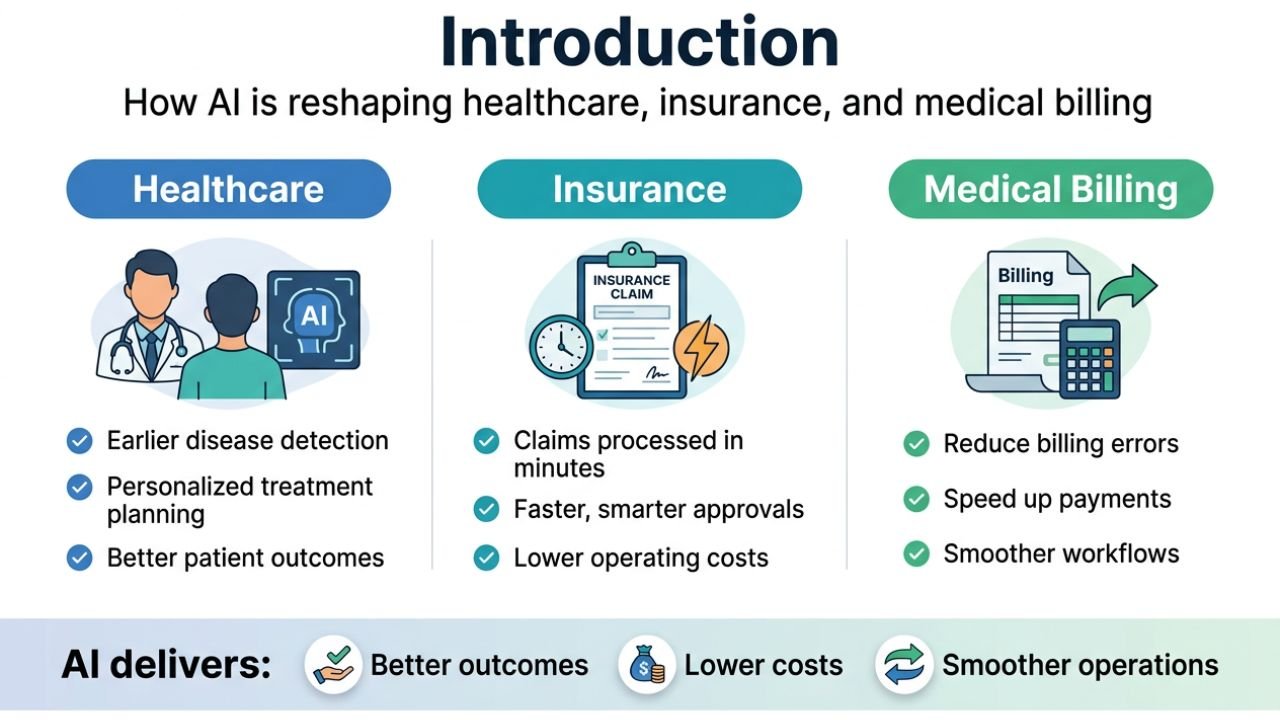
Artificial intelligence is reshaping how healthcare, insurance, and medical billing operate, making these industries faster, smarter, and more accurate than ever before. This guide is designed for healthcare professionals, insurance executives, medical administrators, and anyone curious about how AI applications are changing patient care and business operations.
AI technology is already helping doctors diagnose diseases earlier, insurance companies process claims in minutes instead of weeks, and medical billing teams reduce errors while speeding up payments. The results? Better patient outcomes, lower costs, and smoother operations across the board.
We’ll explore how AI-powered diagnostic tools are catching diseases that human eyes might miss and how intelligent treatment planning is personalizing care for each patient. You’ll also discover how AI is transforming insurance claim processing and revolutionizing medical billing workflows to get healthcare providers paid faster and more accurately.
AI-Powered Diagnostic Solutions Transforming Patient Care
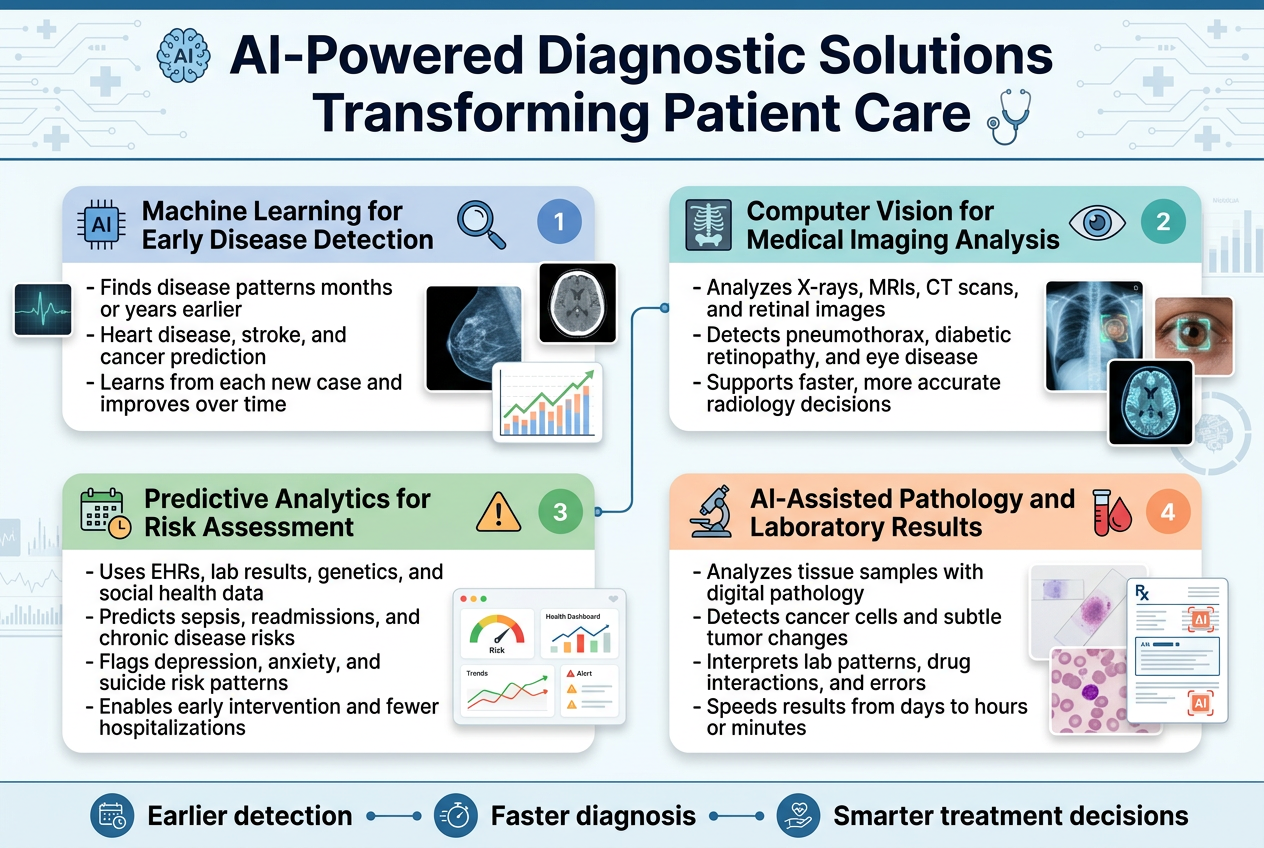
Machine Learning Algorithms for Early Disease Detection
Machine learning algorithms are changing how doctors catch diseases before they become serious problems. These smart systems can spot patterns in patient data that human eyes might miss, often detecting conditions months or even years earlier than traditional methods.
Take heart disease prediction, for example. ML algorithms analyze thousands of data points – from blood pressure readings and cholesterol levels to family history and lifestyle factors. Companies like Aidoc have developed algorithms that can identify signs of stroke in CT scans within minutes, giving doctors precious time to start life-saving treatments.
Cancer detection has seen remarkable advances too. Google’s AI system can identify breast cancer in mammograms with 94.5% accuracy, reducing both false positives and false negatives compared to human radiologists working alone. Similarly, IBM Watson for Oncology processes vast amounts of medical literature alongside patient data to suggest potential cancer diagnoses.
The real game-changer is how these algorithms learn and improve over time. Every new case makes them smarter, creating a constantly evolving diagnostic tool that gets better at catching diseases early when treatment is most effective.
Computer Vision for Medical Imaging Analysis
Computer vision technology is revolutionizing how medical professionals interpret X-rays, MRIs, CT scans, and other imaging studies. These AI-powered systems can analyze images faster and often more accurately than human radiologists, especially for specific conditions.
Zebra Medical Vision’s algorithms can detect pneumothorax in chest X-rays in seconds, alerting emergency room doctors to potentially life-threatening conditions immediately. Their system also screens for osteoporosis, cardiovascular disease, and liver conditions from routine imaging studies.
Retinal imaging has become particularly advanced with AI. Diabetic retinopathy, a leading cause of blindness, can now be detected through smartphone-based eye exams using computer vision. Google’s DeepMind has created an AI system that diagnoses over 50 eye diseases with 94% accuracy, matching the performance of world-leading experts.
Brain imaging analysis has also improved dramatically. AI systems can now detect early signs of Alzheimer’s disease, identify stroke locations, and even predict which patients might develop dementia years before symptoms appear. These tools help doctors make faster, more accurate diagnoses while reducing the workload on overextended radiology departments.
Predictive Analytics for Risk Assessment
Predictive analytics transforms mountains of health data into actionable insights about patient risks. These systems crunch everything from electronic health records and lab results to genetic information and social determinants of health.
Johns Hopkins developed TREWS (Targeted Real-time Early Warning System), which monitors patients continuously and predicts sepsis up to six hours before traditional methods. This early warning system has reduced sepsis-related deaths by 18% and shortened hospital stays significantly.
Chronic disease management has become much more proactive thanks to predictive models. These systems identify patients at high risk for diabetes complications, heart failure, or medication non-compliance. Health systems can then intervene early with targeted programs, preventing costly emergency visits and hospitalizations.
Mental health prediction is another growing area. AI models analyze patterns in electronic health records, social media activity, and even smartphone usage to identify individuals at risk for depression, anxiety, or suicide. While privacy concerns exist, these tools could help mental health professionals reach patients who need help most.
Risk stratification for hospital readmissions has become standard practice. Algorithms predict which patients are likely to return within 30 days, allowing hospitals to provide extra support and follow-up care to prevent costly readmissions.
AI-Assisted Pathology and Laboratory Results
Pathology, long considered an art as much as a science, is becoming increasingly data-driven through AI assistance. Digital pathology platforms use machine learning to analyze tissue samples, helping pathologists make more accurate diagnoses faster.
PathAI’s algorithms can identify cancer cells in tissue samples with remarkable precision, even detecting subtle changes that might escape human notice. Their system has shown particular promise in breast cancer diagnosis, where it can distinguish between different types of tumors and predict treatment responses.
Laboratory result interpretation has become more sophisticated with AI help. These systems can spot unusual patterns across multiple test results, flagging potential drug interactions, rare diseases, or lab errors that might otherwise go unnoticed. They also help standardize interpretations across different laboratories and regions.
Hematology has seen significant advances, with AI systems that can identify blood cancers and other blood disorders from microscopic images. These tools are particularly valuable in areas with limited access to specialized pathologists, democratizing expert-level diagnostics.
The speed improvements are remarkable – what once took days can now be completed in hours or minutes. AI doesn’t replace pathologists but amplifies their capabilities, allowing them to focus on complex cases while handling routine analyses more efficiently.
Revolutionary Treatment Planning and Drug Discovery Through AI
Personalized Treatment Recommendations Based on Patient Data
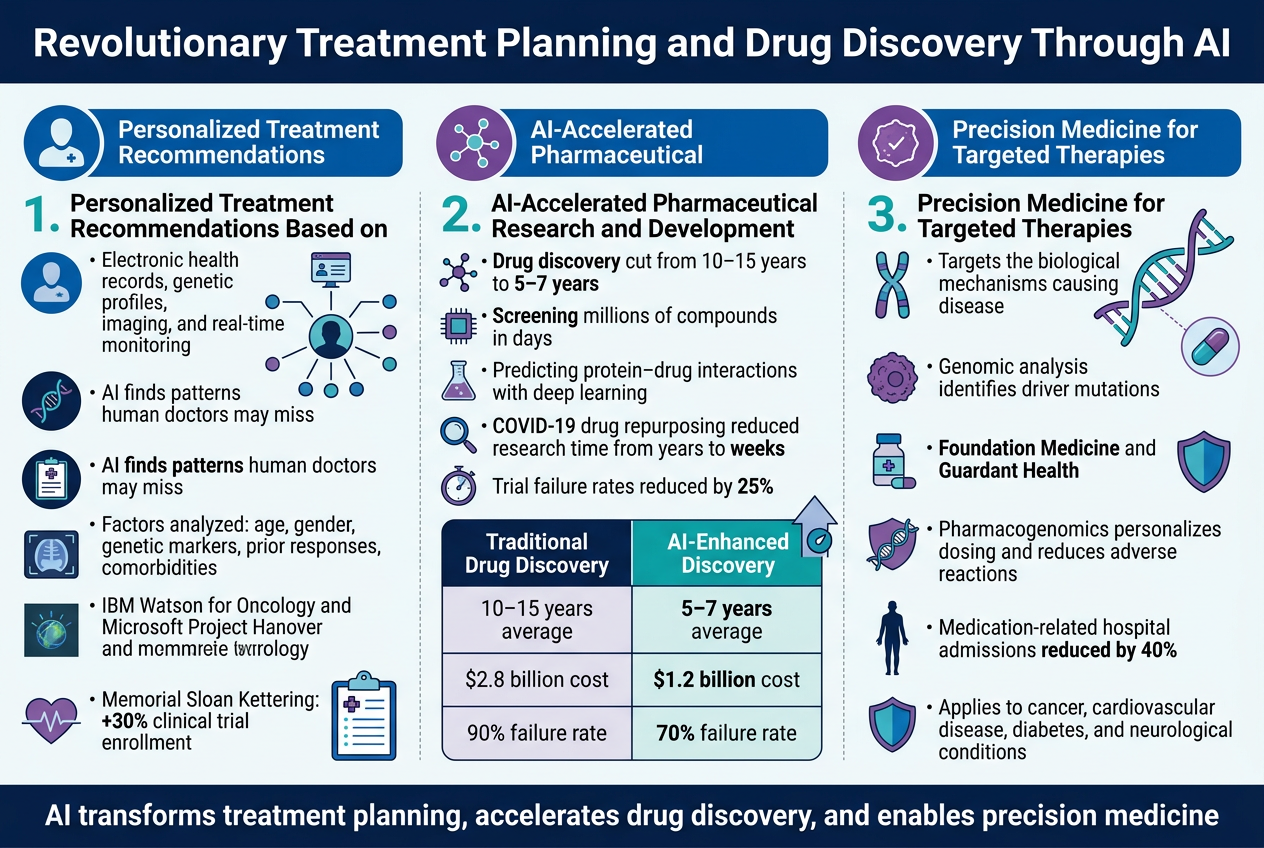
Machine learning algorithms analyze vast amounts of patient information to create tailored treatment plans that work better than traditional one-size-fits-all approaches. These systems examine electronic health records, genetic profiles, medical imaging results, and real-time monitoring data to identify patterns that human doctors might miss.
AI platforms like IBM Watson for Oncology and Microsoft’s Project Hanover process patient histories alongside thousands of medical studies to recommend optimal treatment combinations. The technology considers factors such as age, gender, genetic markers, previous treatment responses, and comorbidities to suggest personalized therapy protocols.
Real-world applications show impressive results. Memorial Sloan Kettering Cancer Center uses AI to match cancer patients with clinical trials based on their specific tumor characteristics and genetic profiles. The system has increased trial enrollment rates by 30% while improving patient outcomes through more targeted therapies.
AI-Accelerated Pharmaceutical Research and Development
Drug discovery traditionally takes 10-15 years and costs billions of dollars. AI changes this timeline dramatically by identifying promising compounds faster and predicting their success rates earlier in development.
Deep learning models analyze molecular structures and predict how potential drugs will interact with target proteins. Companies like Atomwise and BenevolentAI use these predictions to screen millions of compounds in days rather than months. During COVID-19, AI helped identify existing drugs that could be repurposed for treatment, cutting research time from years to weeks.
Clinical trial optimization represents another breakthrough area. AI algorithms identify ideal patient populations for trials, predict enrollment timelines, and flag potential safety issues before they become problems. This approach has reduced trial failure rates by 25% across multiple pharmaceutical companies.
| Traditional Drug Discovery | AI-Enhanced Discovery |
|---|---|
| 10-15 years average | 5-7 years average |
| $2.8 billion cost | $1.2 billion cost |
| 90% failure rate | 70% failure rate |
Precision Medicine for Targeted Therapies
Precision medicine moves beyond symptom-based treatment to target the underlying biological mechanisms causing disease. AI makes this possible by analyzing complex genetic, environmental, and lifestyle data to understand how diseases develop differently in each person.
Genomic analysis platforms powered by AI can identify specific mutations that drive cancer growth, allowing doctors to select therapies that target those exact genetic changes. Companies like Foundation Medicine and Guardant Health use AI to analyze tumor DNA and recommend FDA-approved targeted therapies with higher success rates.
Pharmacogenomics applications help doctors prescribe medications based on how individual patients metabolize different drugs. AI systems analyze genetic variants that affect drug processing, preventing adverse reactions and optimizing dosing. This approach has reduced medication-related hospital admissions by 40% in pilot programs.
The technology extends beyond cancer treatment. AI-driven precision medicine now guides therapy selection for cardiovascular disease, diabetes, and neurological conditions. These systems analyze biomarkers, imaging data, and patient response patterns to continuously refine treatment recommendations and improve long-term outcomes.
AI-Enhanced Healthcare Operations and Workflow Optimization
Intelligent Patient Scheduling and Resource Allocation
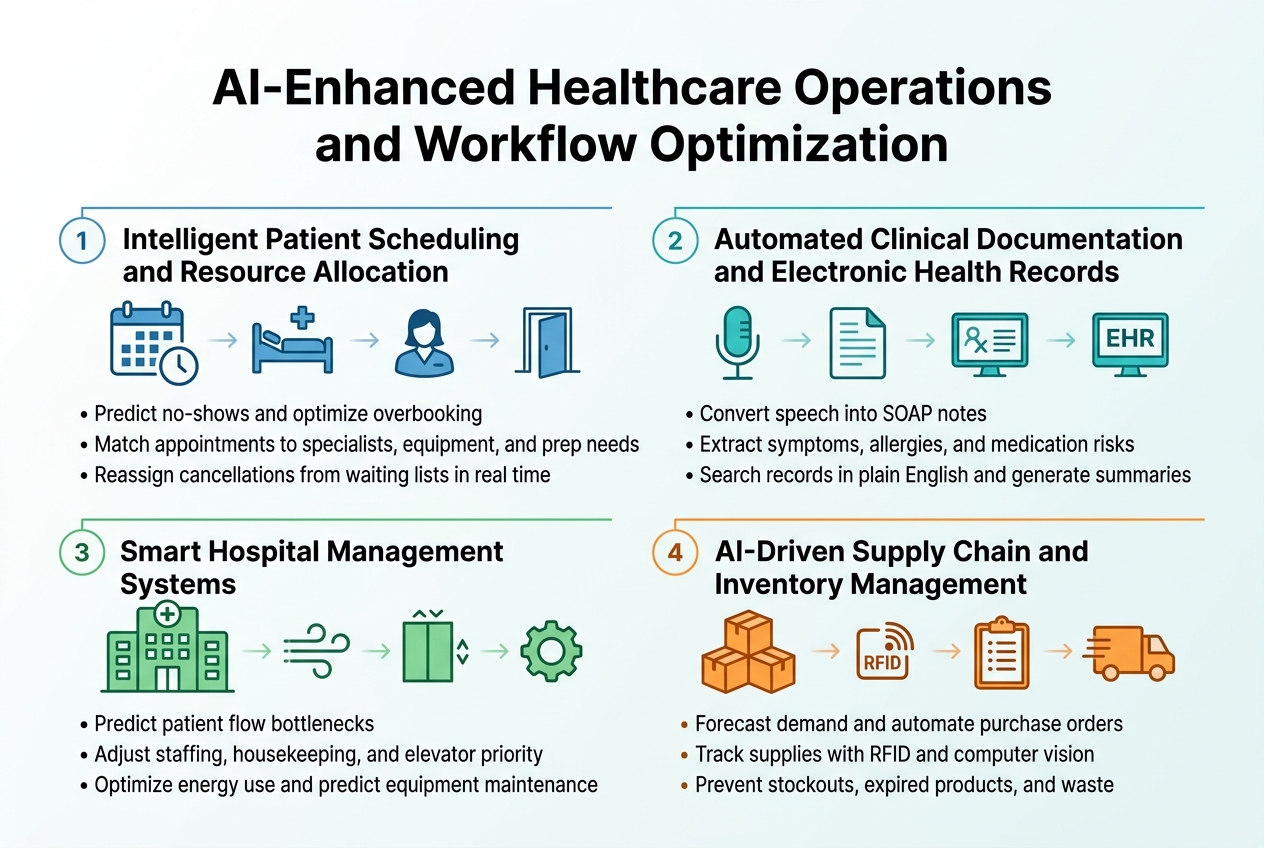
Modern hospitals and clinics face constant challenges juggling patient appointments, staff schedules, and room availability. AI-powered scheduling systems now tackle these complex puzzles with remarkable precision. These smart platforms analyze historical data, patient flow patterns, and resource availability to create optimal schedules that reduce wait times and maximize facility usage.
Machine learning algorithms predict no-show probabilities for individual patients, allowing healthcare providers to overbook strategically without creating chaos. When a patient cancels last-minute, the system automatically identifies suitable replacements from waiting lists based on urgency, location, and appointment type. Some platforms even integrate real-time traffic data and weather conditions to adjust scheduling recommendations.
Advanced systems go beyond basic appointment booking. They consider physician specializations, equipment requirements, and patient preparation needs. For surgical procedures, AI coordinates operating room availability, surgical team schedules, pre-op preparation time, and post-op recovery bed allocation. This comprehensive approach reduces delays and improves patient satisfaction while maximizing revenue potential.
Automated Clinical Documentation and Electronic Health Records
Clinical documentation consumes significant physician time, often leading to burnout and reduced patient interaction. AI-powered documentation tools now convert natural speech into structured clinical notes, freeing doctors to focus on patient care rather than paperwork.
Natural language processing engines listen to patient-physician conversations and automatically generate SOAP notes, extract key symptoms, and populate relevant EHR fields. These systems understand medical terminology, recognize treatment plans, and even flag potential medication interactions or allergies mentioned during consultations.
Smart EHR platforms also enhance data retrieval and analysis. Instead of clicking through multiple screens, physicians can ask questions in plain English: “Show me all diabetic patients with elevated A1C levels from the past month.” The system instantly retrieves relevant records, creates visual summaries, and even suggests evidence-based treatment modifications.
Integration with voice recognition technology allows hands-free documentation during procedures. Surgeons can dictate operative notes while maintaining sterile conditions, and emergency physicians can update patient records without taking their eyes off critical situations.
Smart Hospital Management Systems
Hospitals operate as complex ecosystems where small inefficiencies can cascade into major disruptions. AI-powered management systems now monitor and optimize countless operational variables simultaneously, creating smoother workflows and better patient experiences.
These platforms track patient movement throughout facilities, predicting bottlenecks before they occur. When emergency department volumes spike, the system automatically alerts housekeeping to prioritize room turnover, notifies additional staff to report for duty, and adjusts elevator algorithms to prioritize patient transport.
Energy management represents another significant application. AI systems learn building usage patterns and automatically adjust heating, cooling, and lighting based on occupancy predictions. During quiet overnight hours, systems reduce power consumption while ensuring critical areas remain fully operational.
Predictive maintenance algorithms monitor medical equipment performance, scheduling service before failures occur. By analyzing vibration patterns, temperature fluctuations, and usage data, these systems prevent costly downtime and ensure life-saving equipment remains reliable when needed most.
AI-Driven Supply Chain and Inventory Management
Healthcare supply chains involve thousands of items with varying shelf lives, storage requirements, and usage patterns. Traditional inventory management often leads to stockouts of critical supplies or excessive waste from expired products. AI transforms this landscape through intelligent demand forecasting and automated procurement.
Machine learning models analyze historical usage data, seasonal patterns, and external factors like flu seasons or local events to predict future supply needs. These systems automatically generate purchase orders, negotiate with suppliers, and track deliveries in real-time. When hurricane warnings appear, the system might automatically increase orders for emergency supplies and trauma materials.
Smart inventory tracking uses RFID tags and computer vision to monitor supply levels continuously. When surgical instrument sets return from sterilization, cameras verify completeness and condition while automatically updating availability in scheduling systems. Expired medications trigger immediate alerts and removal protocols.
Cost optimization algorithms balance carrying costs against stockout risks, finding the sweet spot that minimizes waste while ensuring availability. Some systems even coordinate purchasing across hospital networks, leveraging collective buying power for better pricing while sharing excess inventory between facilities during shortages.
Intelligent Insurance Claim Processing and Risk Management
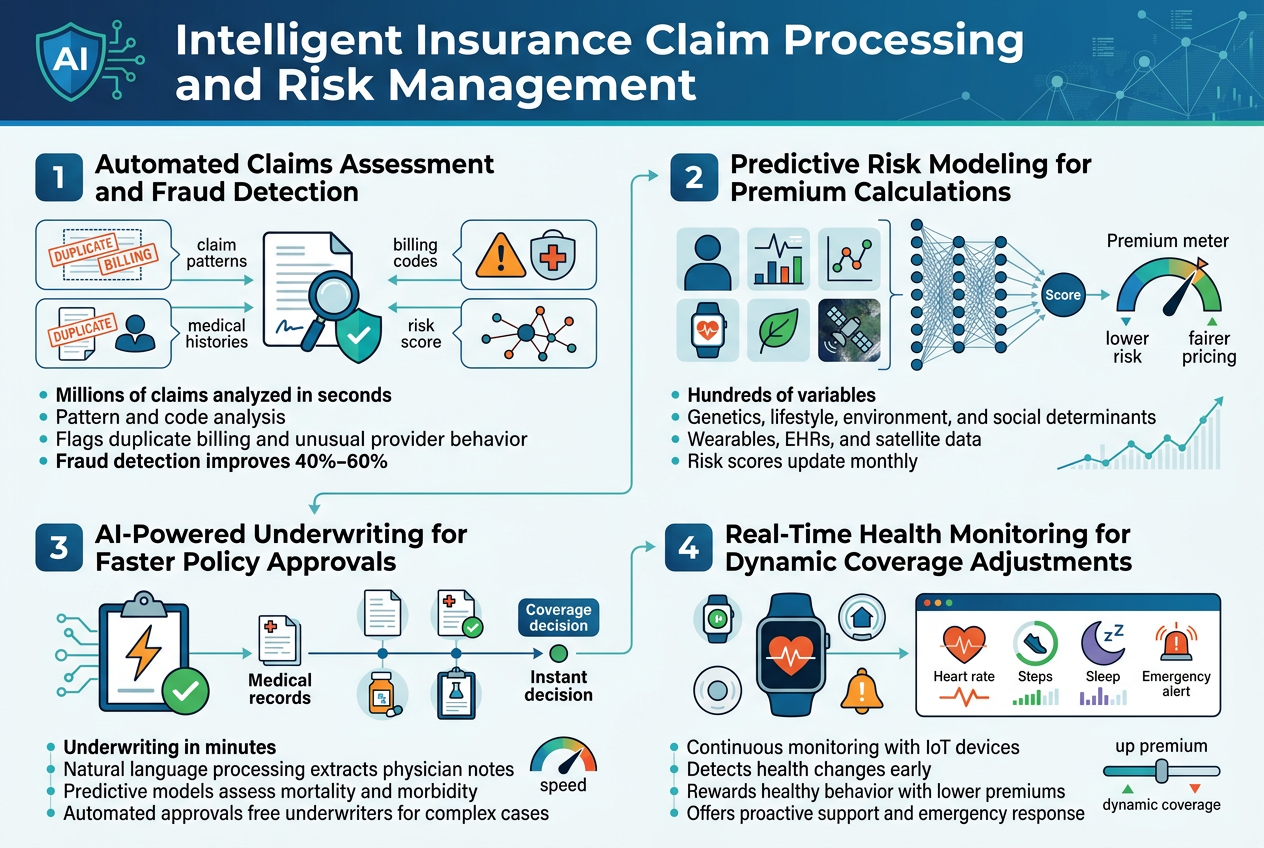
Automated Claims Assessment and Fraud Detection
AI systems now handle millions of insurance claims with remarkable speed and accuracy, catching fraudulent submissions that human reviewers might miss. Machine learning algorithms analyze claim patterns, medical histories, and billing codes to identify suspicious activity within seconds of submission. These systems flag anomalies like duplicate billing, impossible medical procedures, or claims from providers with unusual patterns.
Advanced fraud detection models examine relationships between patients, providers, and procedures, creating risk scores that help investigators prioritize their efforts. Natural language processing tools scan claim narratives and medical records for inconsistencies, while computer vision technology validates medical images and documentation authenticity. Insurance companies report fraud detection rates improving by 40-60% when AI systems work alongside human investigators.
Predictive Risk Modeling for Premium Calculations
Insurance providers leverage AI to create sophisticated risk models that consider hundreds of variables simultaneously. These models analyze everything from genetic predispositions and lifestyle factors to environmental conditions and social determinants of health. Wearable device data, electronic health records, and even satellite imagery help paint accurate pictures of individual and population-level risks.
Machine learning algorithms continuously refine these models as new data becomes available, ensuring premium calculations reflect real-time risk assessments. This dynamic approach allows insurers to offer more competitive rates to low-risk customers while maintaining profitability. Some companies now update risk scores monthly rather than annually, creating fairer pricing structures that reward healthy behaviors.
AI-Powered Underwriting for Faster Policy Approvals
Traditional underwriting processes that once took weeks now complete in minutes through AI automation. Intelligent systems instantly access and analyze medical records, prescription histories, and lab results to make coverage decisions. Natural language processing extracts relevant information from physician notes and medical reports, while predictive models assess mortality and morbidity risks.
Automated underwriting handles straightforward applications without human intervention, freeing underwriters to focus on complex cases requiring nuanced judgment. AI systems also recommend appropriate coverage levels and policy terms based on individual risk profiles. This acceleration benefits both insurers and applicants, reducing administrative costs while improving customer satisfaction through faster decisions.
Real-Time Health Monitoring for Dynamic Coverage Adjustments
Connected health devices and IoT sensors enable insurers to monitor policyholder health continuously, adjusting coverage and premiums based on real-time data. Smart watches track vital signs, activity levels, and sleep patterns, while home monitoring systems detect falls or medical emergencies. This constant stream of health information helps identify risk changes before they become serious problems.
Dynamic coverage models reward policyholders who maintain healthy lifestyles with lower premiums or enhanced benefits. Conversely, systems can identify when someone’s health status changes and proactively offer additional support or coverage options. Real-time monitoring also enables rapid emergency response, potentially saving lives while reducing long-term care costs for insurers.
Streamlined Medical Billing and Revenue Cycle Management
Automated Medical Coding and Billing Accuracy
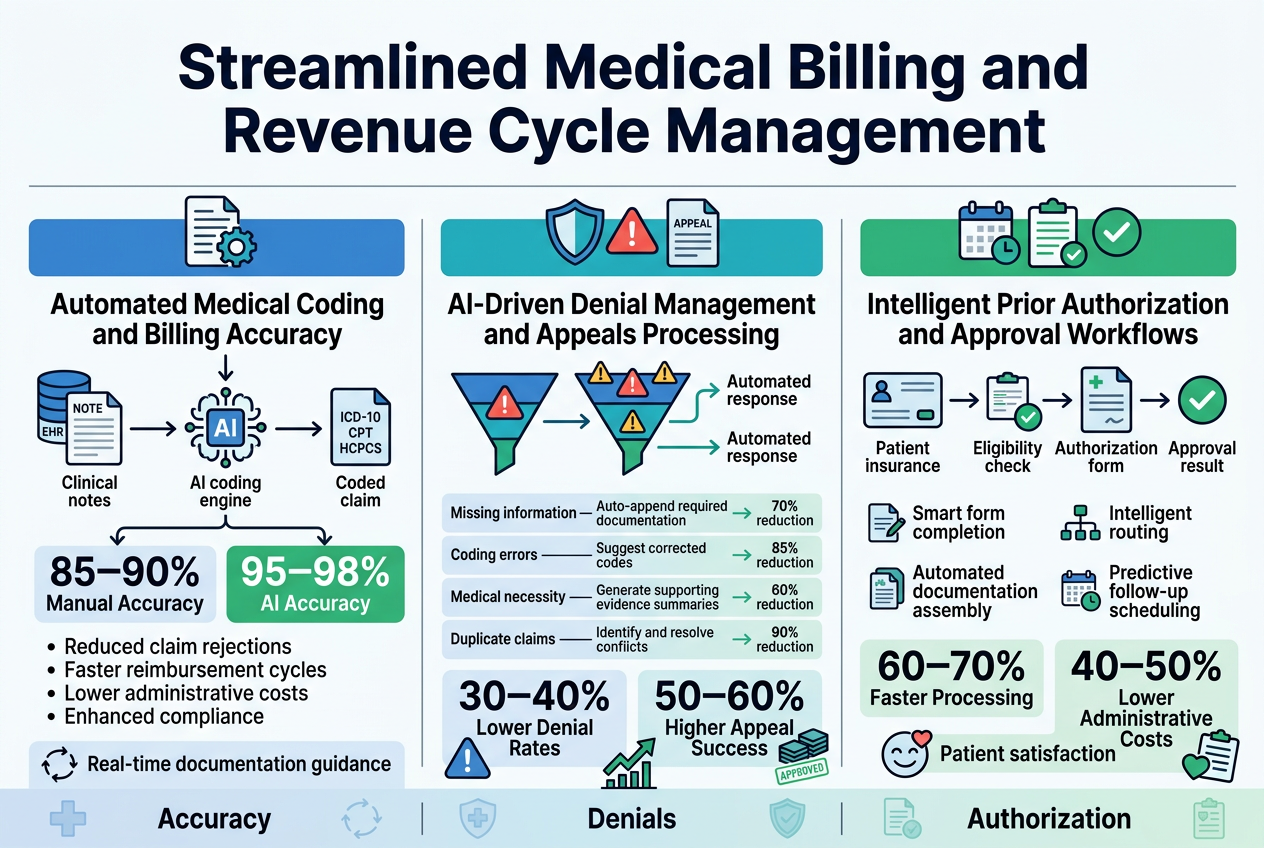
AI-powered medical coding systems are revolutionizing how healthcare organizations handle the complex process of translating medical procedures and diagnoses into standardized codes. These intelligent systems analyze clinical documentation, physician notes, and electronic health records to automatically assign appropriate ICD-10, CPT, and HCPCS codes with remarkable precision.
Machine learning algorithms trained on vast datasets of medical terminology can identify subtle nuances in documentation that human coders might miss or misinterpret. Natural language processing capabilities enable these systems to extract relevant information from unstructured clinical notes, converting narrative descriptions into accurate billable codes in real-time.
The impact on billing accuracy is substantial. Traditional manual coding processes typically achieve 85-90% accuracy rates, while AI-enhanced systems consistently deliver 95-98% accuracy. This improvement translates to:
- Reduced claim rejections due to coding errors
- Faster reimbursement cycles with fewer delays
- Lower administrative costs through reduced manual review requirements
- Enhanced compliance with constantly evolving coding standards
Advanced AI systems also provide real-time feedback to healthcare providers, suggesting optimal documentation practices that support accurate coding. This creates a feedback loop that improves both clinical documentation quality and billing accuracy over time.
AI-Driven Denial Management and Appeals Processing
Healthcare organizations lose billions annually due to claim denials, with traditional denial management processes being reactive and resource-intensive. AI transforms this landscape by introducing predictive analytics and automated response mechanisms that dramatically improve denial prevention and resolution rates.
Predictive denial management systems analyze historical claim data, payer patterns, and submission characteristics to identify potential denial risks before claims are submitted. These systems flag high-risk claims for review, allowing billing teams to address issues proactively rather than reactively managing denials after they occur.
When denials do occur, AI-powered systems excel at categorizing denial reasons and automating appropriate responses:
| Denial Type | AI Response | Time Savings |
|---|---|---|
| Missing information | Auto-append required documentation | 70% reduction |
| Coding errors | Suggest corrected codes | 85% reduction |
| Medical necessity | Generate supporting evidence summaries | 60% reduction |
| Duplicate claims | Identify and resolve conflicts | 90% reduction |
Machine learning algorithms continuously learn from successful appeals, identifying winning strategies and documentation patterns that increase approval rates. This knowledge base becomes increasingly sophisticated, enabling automated generation of compelling appeal letters that incorporate the most effective arguments and supporting evidence.
The financial impact is significant. Organizations implementing AI-driven denial management typically see 30-40% reductions in overall denial rates and 50-60% improvements in successful appeal rates, translating to millions in recovered revenue.
Intelligent Prior Authorization and Approval Workflows
Prior authorization processes have long been a bottleneck in healthcare delivery, causing treatment delays and administrative burden. AI streamlines these workflows by automating eligibility verification, predicting approval likelihood, and optimizing submission strategies.
Intelligent prior authorization systems integrate with multiple payer databases and policy engines to provide real-time eligibility checks and coverage determinations. These systems analyze patient insurance details, treatment histories, and clinical documentation to automatically determine whether prior authorization is required and predict approval probability.
Real-time decision support helps healthcare providers make informed treatment decisions by presenting alternative therapies that don’t require authorization or have higher approval rates. This clinical decision support reduces patient wait times while maintaining quality care standards.
Advanced AI systems also optimize the authorization request process itself:
- Smart form completion using patient data and clinical context
- Automated documentation assembly from electronic health records
- Intelligent routing to appropriate payer representatives
- Predictive follow-up scheduling based on typical processing times
The technology learns from historical authorization patterns to identify which types of requests are likely to be approved, denied, or require additional information. This intelligence enables proactive preparation of supporting documentation and alternative treatment pathways.
Organizations using intelligent prior authorization systems report 60-70% reductions in processing times, 40-50% decreases in administrative costs, and significant improvements in patient satisfaction scores. The technology also reduces provider frustration by eliminating redundant paperwork and streamlining communication with payers.
AI-Powered Patient Engagement and Remote Monitoring
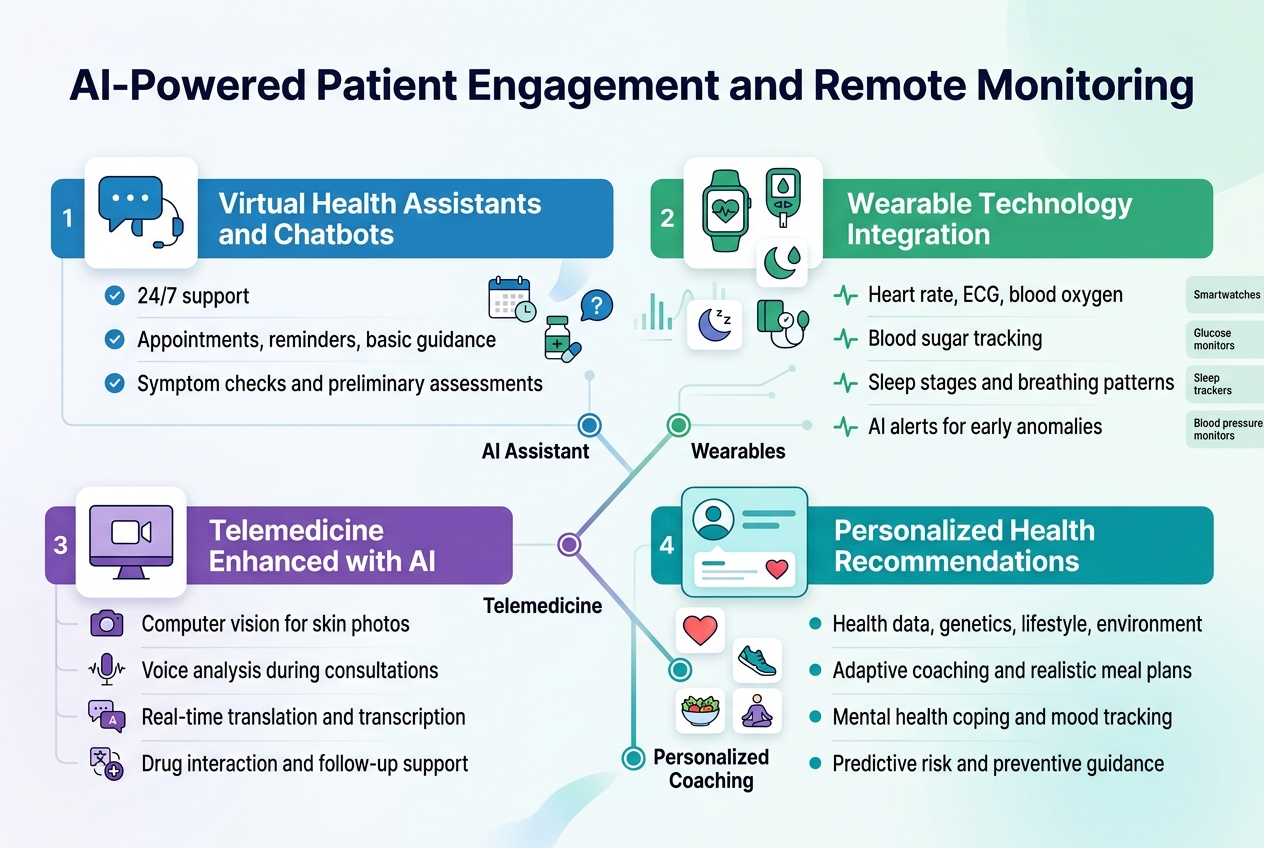
Virtual Health Assistants and Chatbots for 24/7 Support
AI-powered virtual assistants are changing how patients interact with healthcare systems outside traditional office hours. These intelligent chatbots can handle routine inquiries, schedule appointments, provide medication reminders, and offer basic health guidance around the clock. Advanced systems like Babylon Health and Ada Health use natural language processing to understand patient symptoms and provide preliminary assessments, helping people decide whether they need immediate medical attention or can wait for a regular appointment.
The technology goes beyond simple question-and-answer interactions. Modern healthcare chatbots can access patient medical histories, insurance information, and treatment plans to provide personalized responses. They can guide patients through pre-appointment preparations, explain test results in plain language, and even conduct basic mental health screenings. Some systems integrate with electronic health records, allowing them to remind patients about upcoming screenings, vaccination schedules, or prescription refills.
Wearable Technology Integration for Continuous Health Tracking
Wearable devices have evolved from simple step counters to sophisticated health monitoring systems that track everything from heart rhythm irregularities to blood oxygen levels. AI algorithms analyze data from devices like Apple Watches, Fitbits, and specialized medical wearables to detect patterns that might indicate health issues before symptoms appear.
The real power lies in how AI processes millions of data points to identify anomalies. For example, algorithms can detect atrial fibrillation from heart rate data, predict diabetic episodes from glucose monitor readings, or identify early signs of respiratory infections through changes in breathing patterns during sleep. Healthcare providers receive alerts when concerning patterns emerge, enabling proactive interventions.
| Device Type | Key Metrics Monitored | AI Applications |
|---|---|---|
| Smartwatches | Heart rate, ECG, blood oxygen | Arrhythmia detection, fitness optimization |
| Glucose monitors | Blood sugar levels | Diabetes management, trend prediction |
| Sleep trackers | Sleep stages, breathing patterns | Sleep disorder diagnosis, recovery monitoring |
| Blood pressure monitors | Systolic/diastolic pressure | Hypertension management, medication timing |
Telemedicine Platforms Enhanced with AI Capabilities
Telemedicine platforms now incorporate AI tools that make virtual consultations more effective than ever. Computer vision algorithms can analyze skin conditions from smartphone photos, helping dermatologists diagnose issues remotely. Voice analysis can detect changes in speech patterns that might indicate neurological conditions or mental health changes.
AI-enhanced platforms also improve diagnostic accuracy during video consultations. Background noise reduction ensures clear communication, while facial recognition technology can monitor patient vital signs through camera feeds. Some systems use machine learning to suggest diagnostic questions based on patient responses, helping doctors conduct more thorough virtual examinations.
Real-time language translation breaks down barriers for non-English speaking patients, while AI transcription services create accurate medical records from virtual visits. These platforms often include decision support systems that flag potential drug interactions or suggest follow-up care based on the consultation findings.
Personalized Health Recommendations and Lifestyle Coaching
AI systems analyze individual health data, genetic information, lifestyle habits, and environmental factors to create highly personalized health recommendations. These go far beyond generic advice, taking into account each person’s unique circumstances, preferences, and health goals.
Smart coaching systems adapt their recommendations based on user behavior and outcomes. If someone consistently skips morning workouts, the AI might suggest evening exercise routines instead. For nutrition guidance, algorithms consider food preferences, dietary restrictions, cultural backgrounds, and even local grocery store availability to suggest realistic meal plans.
Mental health applications use AI to provide personalized coping strategies, meditation recommendations, and mood tracking insights. Apps like Headspace and Calm use machine learning to understand which techniques work best for different personality types and stress patterns.
The most advanced systems integrate data from multiple sources – wearables, medical records, genetic tests, and user inputs – to create comprehensive health profiles. These profiles enable AI to predict health risks and suggest preventive measures tailored to each individual’s specific risk factors and lifestyle constraints.
AI is completely changing how healthcare works, from the moment patients walk through the door to when their bills get paid. We’re seeing diagnostic tools that spot diseases faster than ever before, treatment plans that are tailored to each person’s unique needs, and drug discovery processes that used to take decades now happening in years. Behind the scenes, AI is making hospitals run smoother, insurance claims get processed quicker, and medical billing way less of a headache for everyone involved.
The real game-changer is how AI brings everything together – better patient care, smarter business operations, and stronger connections between patients and their healthcare teams. If you’re working in healthcare, insurance, or medical billing, now’s the time to explore how AI can make your work more effective and your patients happier. The technology is here, it’s proven, and the organizations already using it are seeing real results that matter to both their bottom line and the people they serve.