
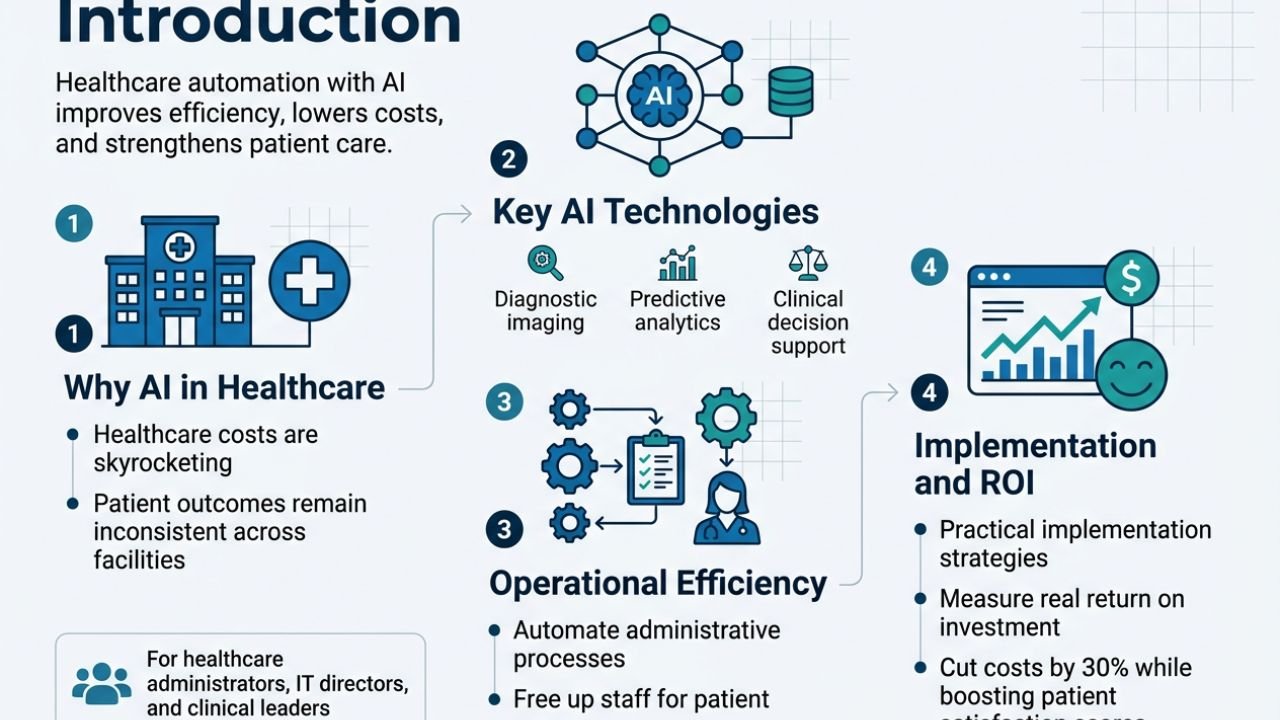
Healthcare costs are skyrocketing while patient outcomes remain inconsistent across facilities. Healthcare automation with AI offers a proven solution to reduce costs and improve patient outcomes by streamlining operations and enhancing clinical decision-making.
This guide is for healthcare administrators, IT directors, and clinical leaders who want to understand how AI can transform their organization’s efficiency and care quality.
We’ll explore the key AI technologies reshaping healthcare operations, from diagnostic imaging to predictive analytics. You’ll discover how automating administrative processes can slash operational costs while freeing up staff for patient care. We’ll also cover practical implementation strategies and show you how to measure the real return on investment from your AI initiatives.
Ready to see how leading healthcare organizations are using AI to cut costs by 30% while boosting patient satisfaction scores? Let’s dive into the specific technologies and strategies that make this transformation possible.
Current Healthcare Challenges Driving AI Automation Adoption
Rising operational costs and administrative burden
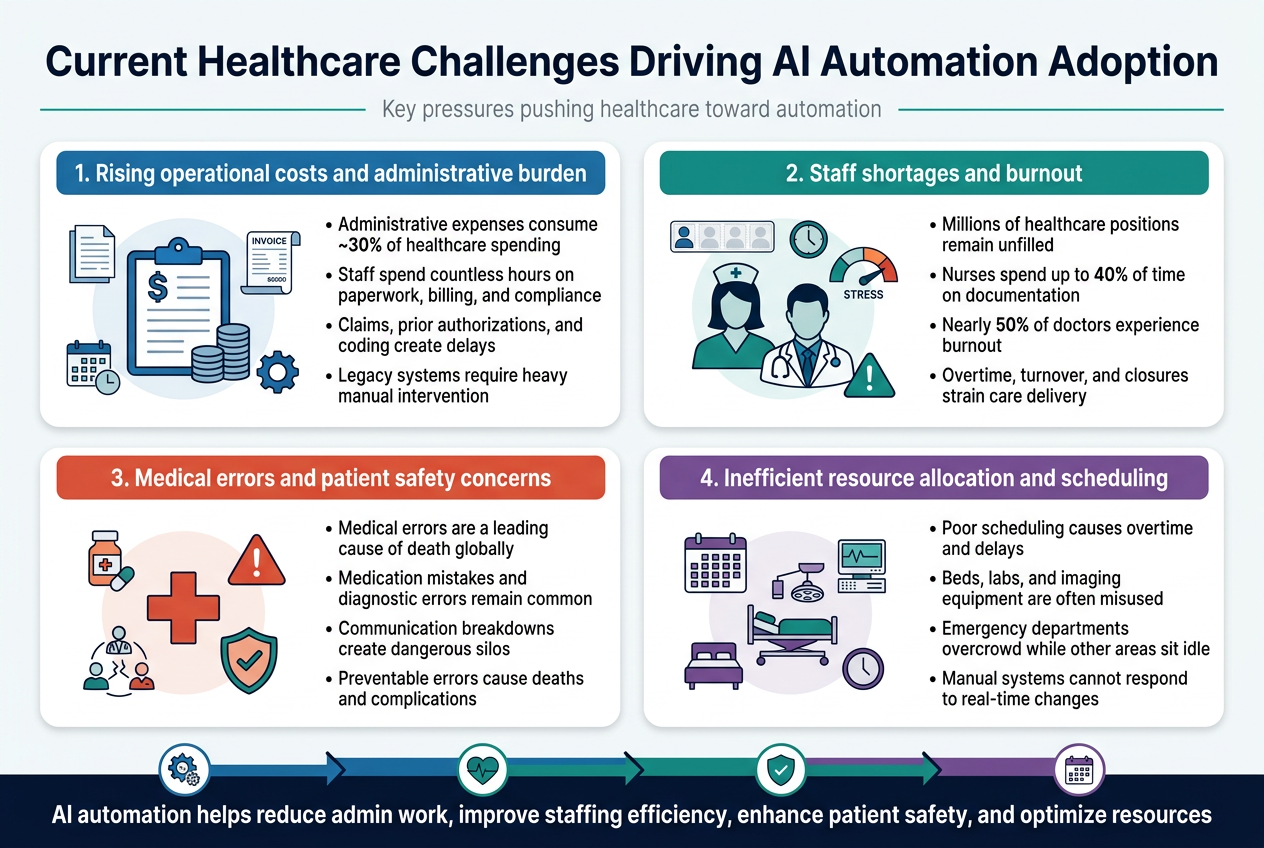
Healthcare systems worldwide face mounting financial pressure as operational costs continue climbing at unsustainable rates. Administrative expenses alone consume roughly 30% of total healthcare spending in many developed countries, with staff dedicating countless hours to paperwork, billing, and regulatory compliance rather than patient care. Insurance claim processing, prior authorizations, and medical coding create bottlenecks that drain resources and delay treatments.
The complexity of modern healthcare billing systems compounds these challenges. Healthcare providers must navigate multiple insurance networks, constantly changing regulations, and intricate reimbursement structures. Manual processing of these tasks leads to errors, claim rejections, and revenue cycle delays that can span months. Many facilities struggle with outdated legacy systems that require extensive human intervention for basic tasks like appointment scheduling, patient registration, and insurance verification.
Staff shortages and burnout across healthcare facilities
The global healthcare workforce shortage has reached crisis levels, with millions of unfilled positions across nursing, physician, and support staff roles. This shortage forces existing employees to work longer hours and handle increased patient loads, creating a dangerous cycle of burnout and turnover. Nurses report spending up to 40% of their time on documentation and administrative tasks rather than direct patient care.
Physician burnout affects nearly 50% of practicing doctors, leading to early retirement, career changes, and reduced productivity. Emergency departments regularly operate at overcapacity, while rural hospitals face closure due to staffing challenges. The COVID-19 pandemic accelerated these trends, pushing many experienced healthcare workers to leave the profession entirely. Recruiting and training new staff takes years, while immediate patient needs continue growing.
Medical errors and patient safety concerns
Medical errors rank among the leading causes of death globally, with diagnostic errors, medication mistakes, and communication breakdowns creating serious safety risks. Studies show that preventable medical errors contribute to hundreds of thousands of deaths annually, while countless more patients suffer non-fatal complications that could have been avoided.
Medication administration errors occur frequently due to illegible handwriting, look-alike drug names, and inadequate cross-checking procedures. Diagnostic errors often stem from cognitive biases, incomplete information sharing between providers, and time pressures that prevent thorough patient evaluation. Communication gaps between shifts, departments, and care teams create dangerous information silos that compromise patient safety.
Inefficient resource allocation and scheduling
Healthcare facilities struggle with optimizing resource utilization, from operating room scheduling to equipment allocation and bed management. Poor scheduling leads to expensive overtime costs, underutilized expensive equipment, and patient care delays. Many hospitals operate with manual scheduling systems that cannot account for real-time changes, emergencies, or complex interdependencies between different departments.
Emergency departments frequently experience overcrowding while other areas remain underutilized, creating inefficiencies that increase costs and reduce patient satisfaction. Laboratory equipment may sit idle during peak demand periods due to poor coordination, while imaging centers struggle with appointment backlogs despite available capacity during off-peak hours. These scheduling inefficiencies cascade throughout the entire healthcare system, affecting everything from surgical procedures to routine checkups.
Key AI Technologies Transforming Healthcare Operations
Machine Learning Algorithms for Predictive Analytics
Healthcare organizations are revolutionizing patient care through sophisticated machine learning models that analyze massive datasets to predict health outcomes. These algorithms process electronic health records, lab results, and real-time monitoring data to identify patients at risk of developing complications before symptoms appear.
Predictive analytics excels in several critical areas:
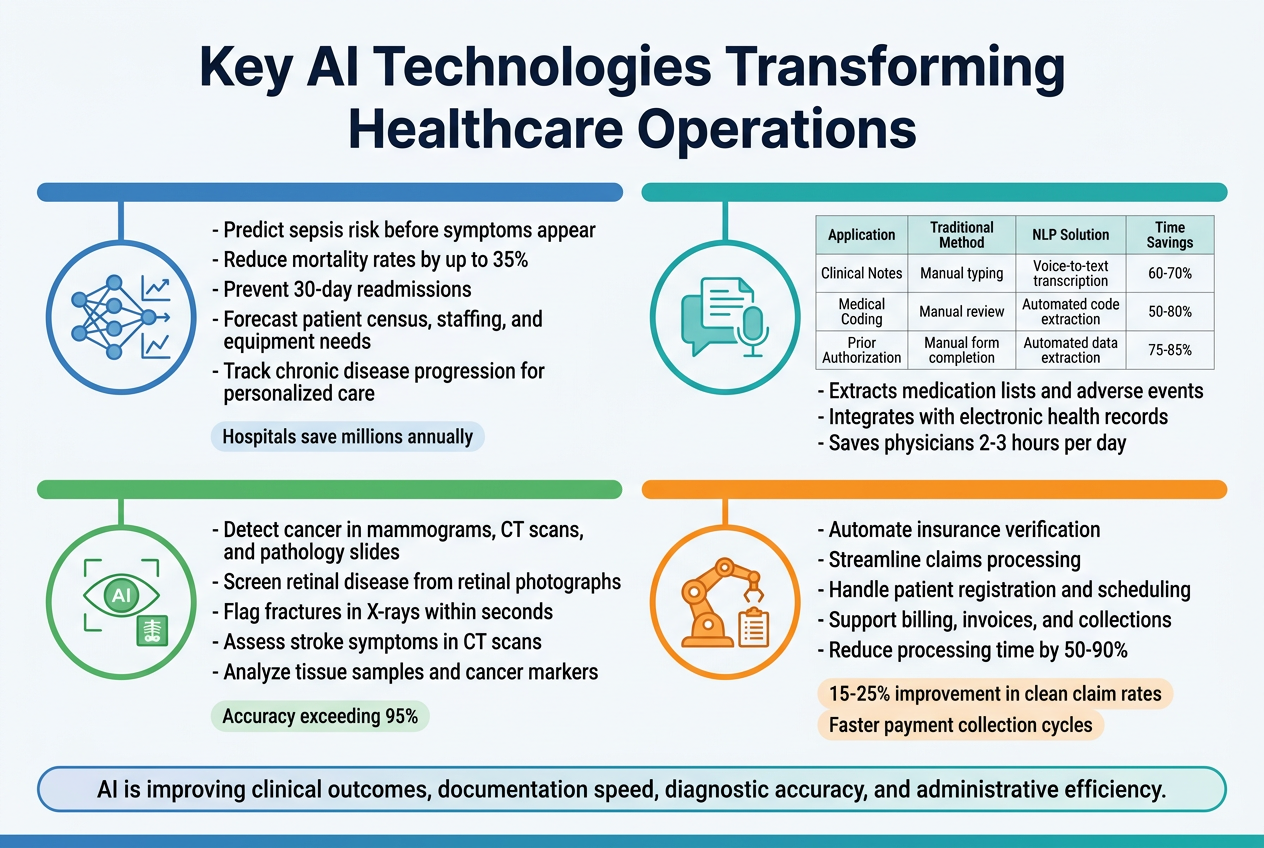
- Sepsis Detection: Machine learning models analyze vital signs, lab values, and patient history to detect early warning signs of sepsis, reducing mortality rates by up to 35%
- Readmission Prevention: Algorithms identify patients likely to return within 30 days, enabling targeted interventions that decrease readmission rates and associated costs
- Resource Planning: Predictive models forecast patient census, staffing needs, and equipment requirements, optimizing hospital operations
- Chronic Disease Management: ML algorithms track disease progression patterns, enabling personalized treatment plans for diabetes, heart disease, and other chronic conditions
Real-world implementations show hospitals saving millions annually while improving patient outcomes. For example, Johns Hopkins uses predictive analytics to prevent sepsis deaths, while Kaiser Permanente leverages ML for diabetes management across their network.
Natural Language Processing for Medical Documentation
Natural language processing transforms how healthcare workers handle the overwhelming burden of clinical documentation. NLP systems convert spoken words into structured medical records, extract key information from unstructured text, and automate coding processes that previously consumed hours of physician time.
The technology addresses several documentation challenges:
| Application | Traditional Method | NLP Solution | Time Savings |
|---|---|---|---|
| Clinical Notes | Manual typing | Voice-to-text transcription | 60-70% |
| Medical Coding | Manual review | Automated code extraction | 50-80% |
| Prior Authorization | Manual form completion | Automated data extraction | 75-85% |
NLP systems understand medical terminology, context, and relationships between symptoms, diagnoses, and treatments. They can extract medication lists from discharge summaries, identify adverse events from clinical notes, and populate quality reporting measures automatically.
Modern NLP platforms integrate seamlessly with existing electronic health record systems, learning from each interaction to improve accuracy. Physicians report spending 2-3 hours less per day on documentation tasks, allowing more time for direct patient care.
Computer Vision for Diagnostic Imaging
Computer vision technology is transforming radiology and pathology by providing AI-powered analysis that matches or exceeds human diagnostic accuracy. These systems process millions of medical images to identify patterns invisible to the human eye, enabling earlier detection of diseases and more precise treatment planning.
Key diagnostic applications include:
- Cancer Detection: AI systems identify malignant tumors in mammograms, CT scans, and pathology slides with accuracy rates exceeding 95%
- Retinal Disease Screening: Computer vision detects diabetic retinopathy and age-related macular degeneration from retinal photographs
- Fracture Identification: Emergency department AI flags bone fractures in X-rays within seconds, prioritizing urgent cases
- Stroke Assessment: CT scan analysis identifies stroke symptoms and measures clot burden to guide treatment decisions
The technology doesn’t replace radiologists but amplifies their capabilities. AI systems flag suspicious cases for priority review, reduce false negatives, and provide quantitative measurements that improve diagnostic consistency. Many radiology departments report 30-40% faster turnaround times while maintaining higher diagnostic accuracy.
Pathology labs use computer vision to analyze tissue samples, count cells, and identify cancer markers. This automation reduces variability between pathologists and enables faster diagnosis, particularly important for cancer staging and treatment planning.
Robotic Process Automation for Administrative Tasks
Robotic process automation eliminates repetitive administrative work that consumes significant healthcare resources without adding clinical value. These software robots handle routine tasks like appointment scheduling, insurance verification, and claims processing with perfect accuracy and 24/7 availability.
RPA transforms these administrative processes:
- Insurance Verification: Bots check patient coverage, benefits, and prior authorization requirements automatically before appointments
- Claims Processing: Automated systems submit, track, and follow up on insurance claims, reducing denial rates and accelerating payment
- Patient Registration: RPA handles appointment scheduling, demographic updates, and insurance card scanning without human intervention
- Billing Operations: Software robots generate invoices, process payments, and manage collections workflows
Healthcare organizations typically see 50-90% reduction in processing time for automated tasks. Staff previously handling these routine activities can focus on complex problem-solving and direct patient interaction. The technology requires minimal IT infrastructure changes and integrates with existing healthcare management systems.
Revenue cycle management benefits significantly from RPA implementation. Automated prior authorization processes reduce delays, while intelligent claims scrubbing prevents rejections. Many health systems report 15-25% improvements in clean claim rates and faster payment collection cycles.
Administrative Process Automation for Cost Reduction
Automated Patient Registration and Insurance Verification
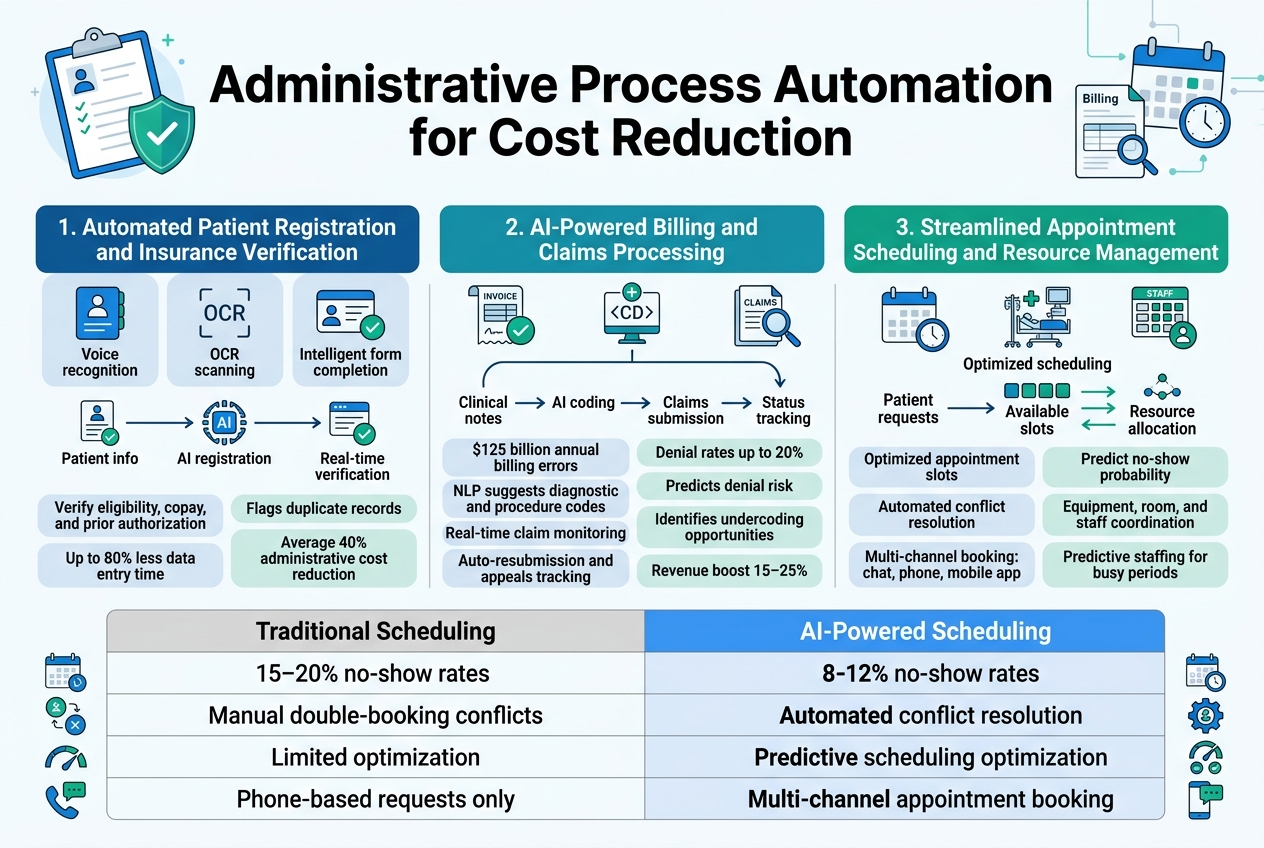
Patient registration has traditionally been a paperwork nightmare that costs healthcare organizations millions in administrative overhead. AI-powered registration systems now capture patient information through voice recognition, OCR scanning, and intelligent form completion that reduces data entry time by up to 80%. These systems automatically verify insurance coverage in real-time, checking eligibility, copay amounts, and prior authorization requirements before patients even arrive for their appointments.
Smart registration platforms integrate with multiple insurance databases simultaneously, cross-referencing patient information across different carriers and plans. Machine learning algorithms identify potential coverage gaps or billing issues before they become problems, preventing costly claim denials down the road. The technology also flags duplicate patient records and merges them automatically, eliminating the confusion and billing errors that plague manual systems.
Digital check-in kiosks equipped with AI can handle routine registration tasks while human staff focus on complex cases requiring personal attention. Patients complete forms on tablets or smartphones, with AI assistants guiding them through the process and asking follow-up questions based on their responses. This approach reduces wait times and improves the patient experience while cutting administrative costs by an average of 40%.
AI-Powered Billing and Claims Processing
Medical billing errors cost the healthcare industry over $125 billion annually, with manual processing contributing to denial rates as high as 20%. AI-driven billing systems analyze thousands of coding patterns and payer rules to ensure claims are submitted correctly the first time. Natural language processing engines review clinical notes and automatically suggest appropriate diagnostic and procedure codes, reducing human error and speeding up the billing cycle.
Intelligent claims processing platforms monitor claim status in real-time, automatically resubmitting denied claims with corrections and tracking appeals through completion. Machine learning algorithms learn from historical claim data to predict which claims are likely to face denials, allowing billing teams to address potential issues proactively. These systems also identify undercoding opportunities, helping healthcare organizations capture revenue they might otherwise miss.
Revenue cycle automation tools integrate seamlessly with existing electronic health records, pulling relevant patient and treatment data directly into billing workflows. AI assistants handle routine billing inquiries from patients and insurance companies, freeing up staff to work on complex cases that require human expertise. The result is faster payment cycles, reduced administrative burden, and improved cash flow that can boost revenue by 15-25%.
Streamlined Appointment Scheduling and Resource Management
Traditional appointment scheduling relies heavily on phone calls and manual coordination, leading to double bookings, no-shows, and inefficient resource use. AI-powered scheduling platforms optimize appointment slots based on provider availability, patient preferences, and treatment requirements. Smart algorithms predict no-show probability for individual patients and automatically overbook accordingly, maximizing schedule efficiency without compromising patient care.
These intelligent systems analyze historical appointment data to identify optimal scheduling patterns for different types of visits. Emergency slots remain available for urgent cases while routine appointments get scheduled during predictably quiet periods. AI assistants handle appointment requests via chat, phone, or mobile apps, providing patients with multiple convenient options while reducing call center volume.
Resource allocation becomes significantly more effective when AI analyzes patterns in equipment usage, room availability, and staff schedules. Predictive analytics help healthcare organizations anticipate busy periods and adjust staffing levels accordingly. The technology also coordinates complex multi-provider appointments, automatically finding time slots that work for all required specialists and ensuring necessary equipment is available.
| Traditional Scheduling | AI-Powered Scheduling |
|---|---|
| 15-20% no-show rates | 8-12% no-show rates |
| Manual double-booking conflicts | Automated conflict resolution |
| Limited optimization | Predictive scheduling optimization |
| Phone-based requests only | Multi-channel appointment booking |
Clinical Workflow Enhancement Through AI Integration
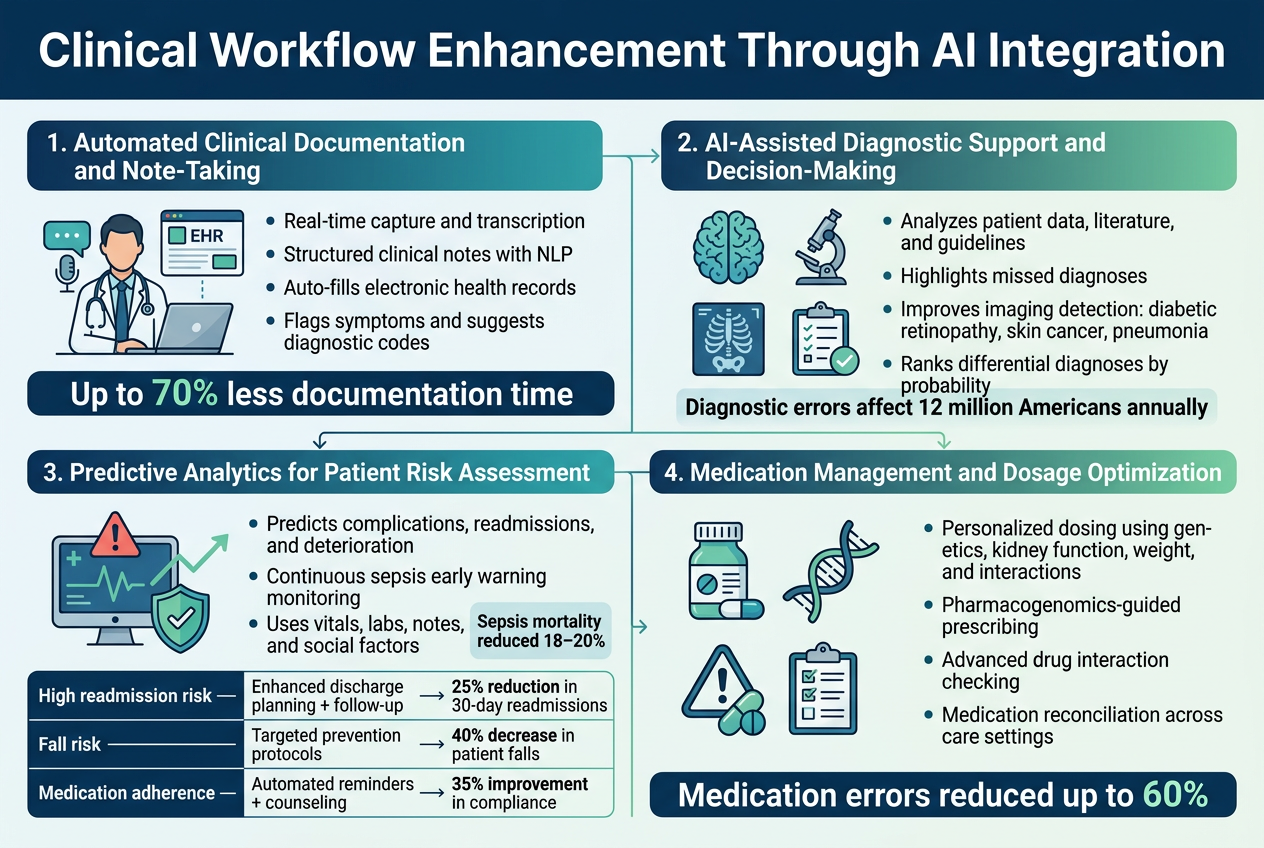
Automated Clinical Documentation and Note-Taking
Clinical documentation has historically consumed countless hours of healthcare providers’ time, pulling them away from direct patient care. AI-powered documentation systems now capture and transcribe patient interactions in real-time, converting spoken conversations into structured clinical notes. These systems use natural language processing to understand medical terminology, context, and patient history, automatically populating electronic health records with relevant information.
Voice recognition technology has evolved beyond simple transcription to intelligent documentation that organizes information into appropriate sections, flags important symptoms, and even suggests relevant diagnostic codes. This technology reduces documentation time by up to 70%, allowing physicians to focus more on patient interaction rather than administrative tasks. The systems also maintain consistency in documentation quality and ensure important details aren’t overlooked during busy clinical sessions.
AI-Assisted Diagnostic Support and Decision-Making
Diagnostic support systems powered by machine learning analyze vast amounts of patient data, medical literature, and clinical guidelines to provide evidence-based recommendations. These tools don’t replace physician judgment but enhance it by highlighting potential diagnoses that might be overlooked, especially in complex cases involving multiple symptoms or rare conditions.
Medical imaging AI has shown remarkable accuracy in detecting conditions like diabetic retinopathy, skin cancer, and pneumonia. Radiology departments report improved diagnostic accuracy and faster turnaround times when radiologists work alongside AI tools. The technology excels at pattern recognition, often identifying subtle abnormalities that human eyes might miss during initial screening.
Clinical decision support systems integrate laboratory results, vital signs, patient history, and current symptoms to generate differential diagnoses ranked by probability. This approach helps reduce diagnostic errors, which affect approximately 12 million Americans annually and contribute significantly to healthcare costs.
Predictive Analytics for Patient Risk Assessment
Predictive modeling transforms historical patient data into actionable insights about future health events. Hospitals use these systems to identify patients at high risk for complications, readmissions, or deterioration, enabling proactive interventions that improve outcomes while reducing costs.
Sepsis prediction models continuously monitor patient vital signs, laboratory values, and clinical notes to detect early warning signs of this life-threatening condition. Early detection systems have reduced sepsis mortality rates by 18-20% in participating hospitals by alerting clinicians to subtle changes that precede clinical deterioration.
Risk stratification algorithms help healthcare teams prioritize resources for patients most likely to benefit from intensive monitoring or specialized care. These tools consider multiple factors including age, comorbidities, social determinants of health, and treatment history to create comprehensive risk profiles.
| Risk Category | Intervention Strategy | Outcome Improvement |
|---|---|---|
| High readmission risk | Enhanced discharge planning + follow-up | 25% reduction in 30-day readmissions |
| Fall risk | Targeted prevention protocols | 40% decrease in patient falls |
| Medication adherence | Automated reminders + counseling | 35% improvement in compliance |
Medication Management and Dosage Optimization
AI-driven medication management systems analyze patient-specific factors like genetics, kidney function, weight, and drug interactions to recommend optimal dosing strategies. These systems reduce adverse drug events, which affect over 2 million Americans yearly and cost the healthcare system billions of dollars.
Pharmacogenomics integration allows AI systems to consider genetic variations that affect drug metabolism, helping clinicians select medications and doses most likely to be effective for individual patients. This personalized approach reduces trial-and-error prescribing and minimizes adverse reactions.
Automated drug interaction checking goes beyond basic contraindication alerts to provide nuanced recommendations based on timing, dosage, and patient-specific risk factors. The systems learn from outcomes data to refine their recommendations continuously, becoming more accurate over time.
Medication reconciliation AI compares prescribed medications across different care settings, identifying discrepancies that could lead to dangerous drug combinations or missed doses. This technology has reduced medication errors by up to 60% in hospitals that have implemented comprehensive medication management systems.
Real-time monitoring of medication effectiveness allows for dynamic dose adjustments based on patient response, laboratory values, and clinical outcomes. This approach optimizes therapeutic benefits while minimizing side effects and treatment costs.
Measuring ROI and Quantifiable Benefits of Healthcare AI
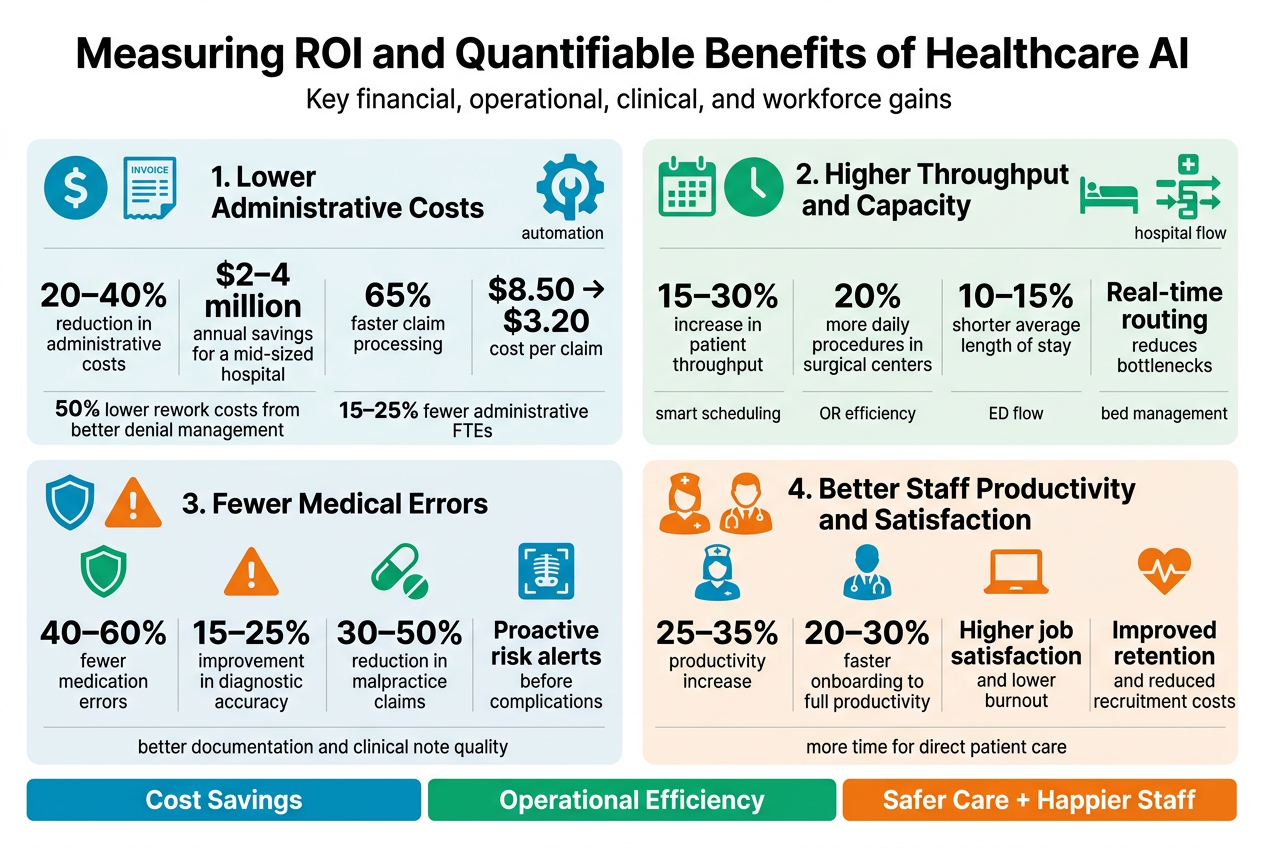
Percentage reduction in administrative costs
Healthcare organizations implementing AI automation consistently report administrative cost reductions between 20-40% within the first two years. These savings come from streamlined billing processes, automated insurance verification, and reduced manual data entry. For a mid-sized hospital system processing 50,000 patient visits annually, this translates to savings of $2-4 million per year.
Revenue cycle management benefits significantly from AI implementation. Automated coding and billing systems reduce claim processing time by 65% while improving accuracy rates to 95% or higher. This combination cuts the average cost per claim from $8.50 to approximately $3.20. Denial management becomes more efficient as AI systems identify potential issues before submission, reducing rework costs by up to 50%.
Staffing costs decrease as routine tasks become automated. Administrative teams can be redeployed to higher-value activities like patient experience enhancement and complex case management. Many organizations report reducing administrative full-time equivalents by 15-25% while maintaining or improving service levels.
Improved patient throughput and capacity utilization
AI-powered scheduling and resource optimization systems increase patient throughput by 15-30% without requiring additional physical infrastructure. Smart scheduling algorithms consider provider availability, patient preferences, equipment needs, and historical patterns to minimize gaps and optimize appointment sequences.
Operating room efficiency improves dramatically with AI assistance. Predictive analytics help surgical teams better estimate procedure duration, reducing delays and maximizing daily case volume. Some surgical centers report 20% increases in daily procedures after implementing AI scheduling systems.
Emergency department flow benefits from AI triage and bed management systems. Predictive models anticipate admission needs and discharge timing, allowing hospitals to better prepare for patient volume fluctuations. Average length of stay decreases by 10-15% as coordination between departments improves through automated communication systems.
Patient flow optimization extends beyond scheduling. AI systems track real-time capacity across departments, automatically routing patients to available resources and preventing bottlenecks that traditionally reduce overall facility utilization.
Decreased medical errors and malpractice claims
Clinical decision support systems powered by AI reduce medication errors by 40-60% through real-time drug interaction checking, dosage verification, and allergy alerts. These systems catch potential problems before they reach patients, significantly reducing adverse events and associated costs.
Diagnostic accuracy improvements range from 15-25% when AI assists radiologists, pathologists, and other specialists. Early detection of conditions like sepsis, deteriorating patient status, and medication complications leads to faster interventions and better outcomes. Malpractice insurance premiums often decrease for organizations demonstrating consistent use of AI safety systems.
Documentation quality improves with AI-powered clinical note generation and error checking. Complete, accurate medical records reduce legal vulnerabilities while supporting better care coordination. Many healthcare systems report 30-50% reductions in malpractice claims within three years of implementing comprehensive AI safety systems.
Risk management becomes more proactive as AI systems identify patterns that might lead to adverse events. Predictive models alert clinical teams to high-risk situations before complications develop, shifting focus from reactive to preventive care approaches.
Enhanced staff productivity and job satisfaction
Clinical staff productivity increases 25-35% when AI handles routine documentation, data retrieval, and administrative tasks. Nurses spend more time on direct patient care rather than computer work, improving both job satisfaction and patient relationships. Physician burnout rates decrease as AI reduces cognitive load and administrative burden.
Training and onboarding become more efficient with AI-powered learning systems that adapt to individual needs and learning styles. New staff reach full productivity 20-30% faster, reducing orientation costs and improving retention rates.
Work-life balance improves as AI systems handle after-hours monitoring and routine alerts, reducing the need for staff to respond to non-urgent issues outside normal working hours. Many healthcare workers report higher job satisfaction scores after AI implementation, leading to improved retention rates and reduced recruitment costs.
Career development opportunities expand as staff transition from routine tasks to more complex, rewarding work. This professional growth often correlates with improved employee engagement scores and reduced turnover, saving organizations substantial recruitment and training expenses.
Implementation Best Practices for Healthcare AI Automation
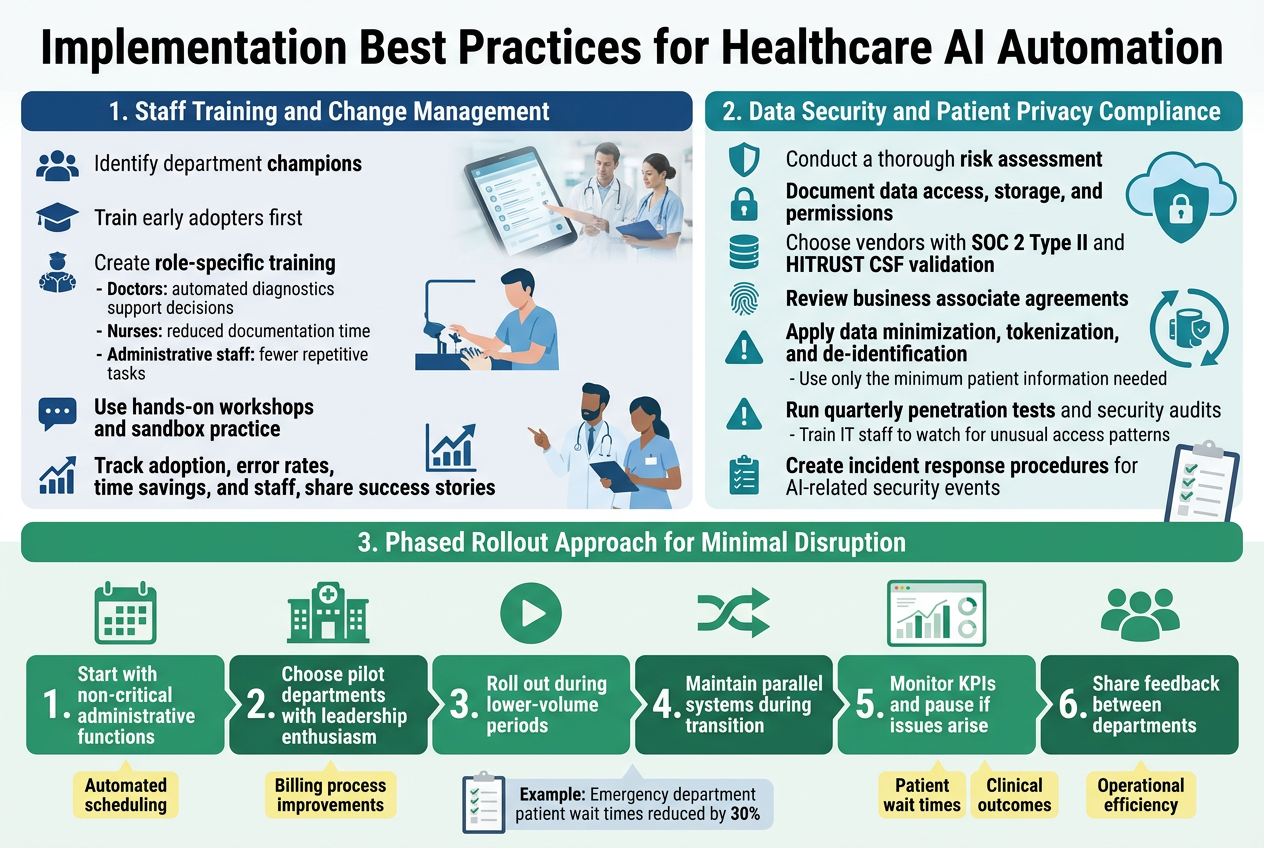
Staff Training and Change Management Strategies
Healthcare professionals often resist new technology, especially when it disrupts familiar workflows. Start by identifying champions within each department who can advocate for AI automation and help colleagues adapt. These early adopters should receive comprehensive training first, then serve as peer mentors during broader rollouts.
Create role-specific training programs that focus on how AI tools will actually improve daily work rather than replace jobs. Doctors need to understand how automated diagnostics enhance their decision-making, while nurses should see how AI reduces documentation time. Administrative staff should learn how automation eliminates repetitive tasks, freeing them for patient interaction.
Hands-on workshops work better than theoretical presentations. Set up sandbox environments where staff can practice with AI tools without affecting real patient data. Include scenarios they encounter regularly, like processing insurance claims or reviewing lab results. This builds confidence and reduces anxiety about making mistakes.
Address concerns directly through open forums and Q&A sessions. Many healthcare workers worry about liability when AI makes recommendations. Clarify that AI serves as decision support, not decision replacement. Explain how automated systems actually create better audit trails and documentation.
Track adoption metrics beyond simple usage statistics. Monitor error rates, time savings, and staff satisfaction scores. Celebrate early wins publicly and share success stories across departments. When the emergency department reduces patient wait times by 30% through automated triage, make sure the entire hospital knows about it.
Data Security and Patient Privacy Compliance
HIPAA compliance becomes more complex with AI systems that process vast amounts of patient data. Start by conducting a thorough risk assessment of all data flows between existing systems and new AI platforms. Document exactly what patient information gets accessed, how long it’s stored, and who can view it.
Choose AI vendors with robust healthcare security certifications, including SOC 2 Type II and HITRUST CSF validation. Review their business associate agreements carefully, paying special attention to data retention policies and breach notification procedures. Many AI companies have standard agreements that don’t meet healthcare requirements, so expect negotiations.
Implement data minimization practices by only feeding AI systems the minimum patient information needed for specific functions. Automated scheduling doesn’t need full medical histories, while clinical decision support might require comprehensive records. Use tokenization and de-identification techniques whenever possible to protect patient identity.
Regular penetration testing becomes critical when AI systems integrate with electronic health records and other sensitive databases. Schedule quarterly security audits that specifically test AI endpoints and data transmission protocols. Train IT staff to monitor for unusual data access patterns that might indicate security breaches or system misuse.
Create detailed incident response procedures for AI-related security events. When an automated system behaves unexpectedly or produces concerning outputs, staff need clear protocols for containment and investigation. This includes documenting potential patient safety impacts and notifying appropriate regulatory bodies.
Phased Rollout Approach for Minimal Disruption
Begin with non-critical administrative functions where mistakes won’t directly impact patient care. Automated appointment scheduling and billing processes provide excellent starting points because they offer measurable benefits with lower risk. Success in these areas builds organizational confidence for more complex implementations.
Choose pilot departments based on leadership enthusiasm rather than just clinical need. A department head who actively supports AI adoption will help smooth implementation challenges and encourage staff participation. Emergency departments and radiology often make good early adopters because they already use technology heavily and see immediate workflow improvements.
Plan rollouts during lower-volume periods when possible. Avoid implementing new AI systems during flu season, major holidays, or other predictably busy times. Build in extra staffing during transition periods so clinical operations don’t suffer while staff learn new processes.
Maintain parallel systems during transition phases. Keep existing workflows running while AI systems prove their reliability. This provides fallback options if automated processes fail and reduces staff anxiety about depending entirely on new technology. Gradually phase out manual processes only after AI systems demonstrate consistent performance.
Monitor key performance indicators closely during each rollout phase. Track metrics like patient satisfaction scores, clinical outcomes, and operational efficiency. Set specific thresholds for moving to the next implementation phase. If patient wait times increase or error rates spike, pause the rollout and address issues before proceeding.
Create feedback loops between departments that have successfully implemented AI and those preparing for rollout. Regular cross-departmental meetings allow teams to share practical tips and troubleshoot common problems. This peer-to-peer learning often proves more effective than vendor training sessions.
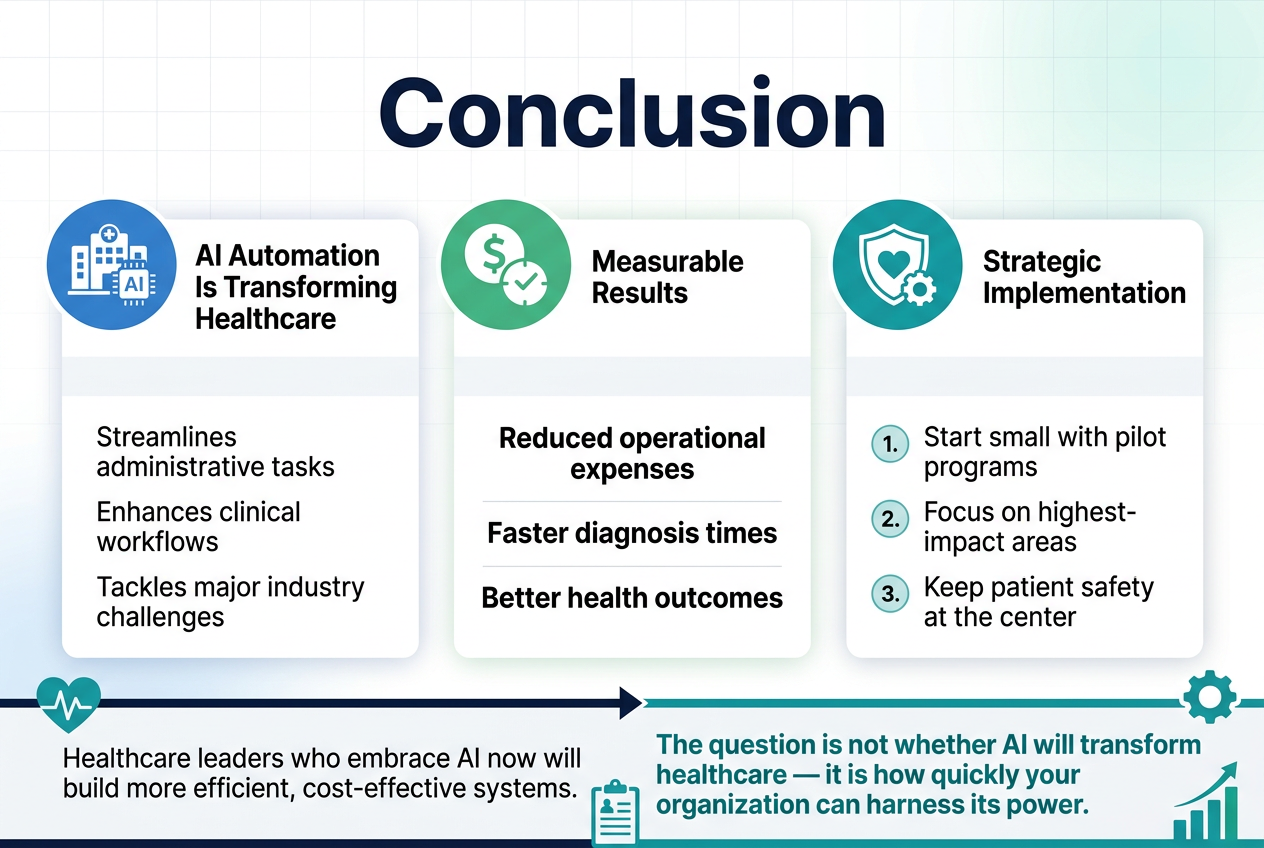
AI automation is reshaping healthcare by tackling the industry’s most pressing challenges head-on. From streamlining administrative tasks to enhancing clinical workflows, these technologies deliver measurable cost savings while improving patient care quality. The data speaks volumes – organizations implementing AI solutions see reduced operational expenses, faster diagnosis times, and better health outcomes across the board.
The path forward requires strategic planning and careful implementation. Start small with pilot programs, focus on areas with the highest impact potential, and always keep patient safety at the center of your automation strategy. Healthcare leaders who embrace these technologies now will build more efficient, cost-effective systems that benefit both their bottom line and the communities they serve. The question isn’t whether AI will transform healthcare – it’s how quickly your organization can harness its power to create better patient experiences and sustainable operations.