
AI Healthcare Solutions in the USA: Trends, Costs & Benefits
AI Healthcare Solutions in the USA: Trends, Costs & Benefits
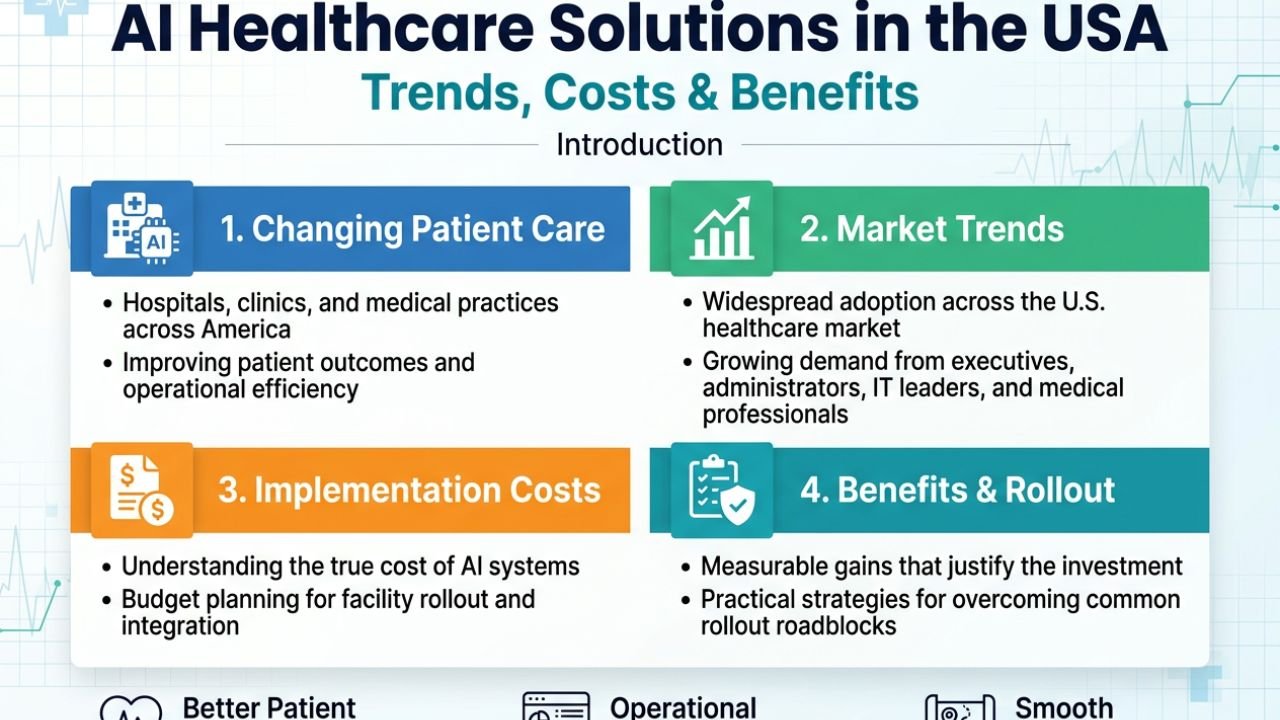
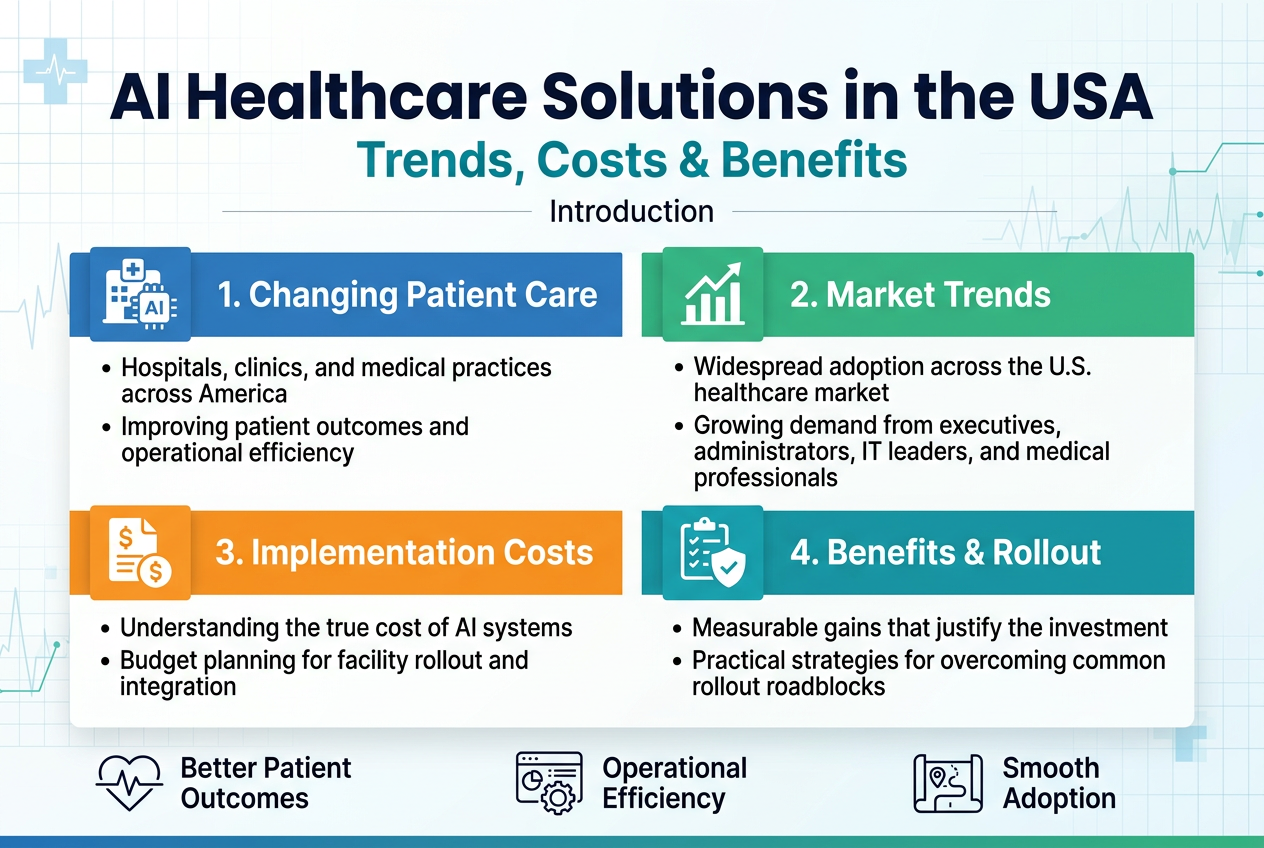
AI healthcare solutions are changing how hospitals, clinics, and medical practices across America deliver patient care. Healthcare executives, administrators, IT decision-makers, and medical professionals need to understand how these technologies impact their organizations and bottom line.
This guide breaks down the current AI tools making real differences in patient outcomes and operational efficiency. We’ll explore the market trends pushing widespread adoption and examine the true costs of implementing these systems in your facility. You’ll also discover the measurable benefits that justify the investment and learn practical strategies for overcoming common roadblocks during rollout.
Current AI Healthcare Technologies Transforming Patient Care
Machine Learning Diagnostics and Medical Imaging Analysis
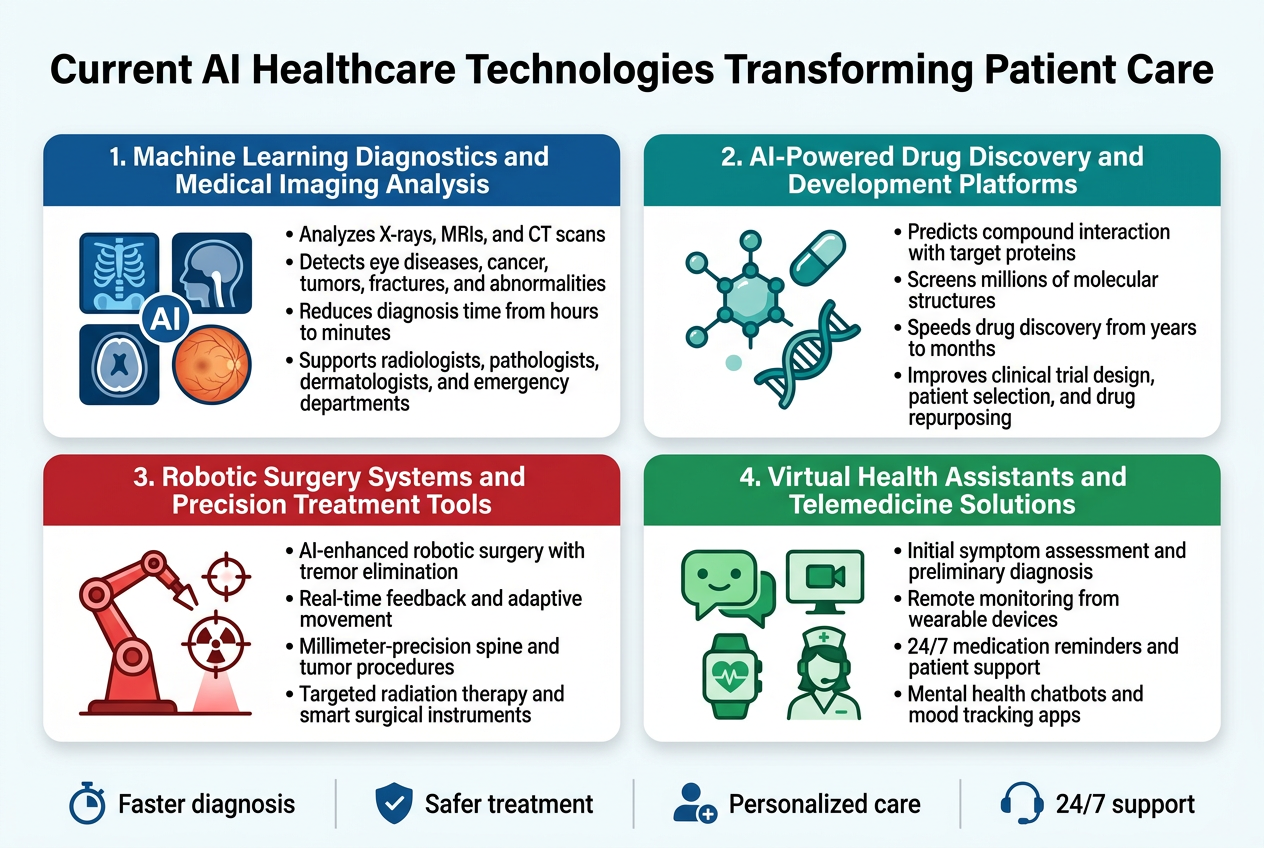
Machine learning algorithms are revolutionizing how doctors diagnose diseases and interpret medical images. AI systems now analyze X-rays, MRIs, and CT scans with remarkable accuracy, often spotting conditions human eyes might miss. Google’s DeepMind has developed AI that can detect over 50 eye diseases from retinal scans, while IBM Watson for Oncology helps oncologists make treatment decisions by analyzing vast amounts of cancer research data.
Radiology departments across major US hospitals rely on AI tools that flag potential tumors, fractures, and abnormalities in real-time. These systems work alongside radiologists, reducing diagnosis time from hours to minutes while improving accuracy rates. PathAI and other companies have created machine learning platforms that analyze tissue samples for cancer detection, achieving diagnostic precision that matches or exceeds experienced pathologists.
The technology excels at pattern recognition, analyzing thousands of medical images simultaneously to identify subtle indicators of disease progression. Emergency departments use AI-powered chest X-ray analysis to quickly identify pneumonia, while dermatology practices employ computer vision to screen for skin cancer through smartphone photos.
AI-Powered Drug Discovery and Development Platforms
Pharmaceutical companies are using artificial intelligence to accelerate drug discovery processes that traditionally take 10-15 years. AI platforms can now predict how different compounds will interact with target proteins, dramatically reducing the time needed for initial drug screening. Companies like Atomwise and Recursion Pharmaceuticals use machine learning to identify promising drug candidates in months rather than years.
These platforms analyze millions of molecular structures and predict their therapeutic potential before any lab testing begins. AI models can simulate how drugs will behave in human bodies, predicting side effects and effectiveness early in development. Biogen partnered with Accenture to use AI for identifying new treatments for neurological diseases, while Roche employs machine learning to optimize clinical trial design and patient selection.
The technology also personalizes drug development by analyzing genetic data to predict which patients will respond best to specific treatments. AI-driven platforms have already contributed to breakthrough discoveries, including COVID-19 treatments and new antibiotics. Drug repurposing efforts use AI to find new applications for existing medications, potentially bringing treatments to market faster and at lower costs.
Robotic Surgery Systems and Precision Treatment Tools
Robotic surgical systems equipped with AI capabilities are transforming operating rooms across America. The da Vinci Surgical System, used in over 6,000 US hospitals, combines robotic precision with AI-enhanced visualization to perform minimally invasive procedures. Surgeons control robotic arms with tremor elimination and motion scaling, allowing for incredibly precise movements during delicate operations.
AI-powered surgical robots can now adapt to unexpected situations during procedures, automatically adjusting for patient movement or tissue changes. These systems provide real-time feedback to surgeons, highlighting critical structures and suggesting optimal surgical paths. Mazor X spinal surgery robots use AI to plan and execute spine procedures with millimeter precision, reducing complications and recovery times.
Precision treatment tools extend beyond surgery to radiation therapy and other interventions. CyberKnife systems use AI to track tumor movement and deliver targeted radiation beams that move with the patient’s breathing. Smart surgical instruments equipped with sensors can distinguish between healthy and diseased tissue, guiding surgeons during tumor removal procedures.
Virtual Health Assistants and Telemedicine Solutions
AI-powered virtual health assistants have become essential tools for patient care and medical practice management. Babylon Health’s AI chatbot conducts initial patient assessments, asking relevant questions and providing preliminary diagnoses based on symptoms. These digital assistants help patients determine whether they need immediate care, can wait for a regular appointment, or should try home remedies.
Telemedicine platforms integrate AI to enhance remote consultations and monitoring. AI algorithms analyze patient data from wearable devices, alerting healthcare providers to concerning changes in vital signs or activity patterns. Companies like Teladoc and Amwell use machine learning to match patients with appropriate specialists and predict which cases require in-person visits.
Virtual nursing assistants help hospitals manage patient care outside traditional visiting hours. These AI systems answer patient questions, remind them to take medications, and escalate concerns to human nurses when necessary. Voice-activated assistants in hospital rooms allow patients to request help, adjust room settings, or access entertainment without touching potentially contaminated surfaces.
The technology also supports mental health care through AI-powered therapy chatbots and mood tracking applications. These tools provide 24/7 support for patients with anxiety, depression, or other mental health conditions, bridging gaps between traditional therapy sessions and offering immediate assistance during crisis situations.
Market Trends Driving AI Healthcare Adoption Across America
Government Policy Changes and Healthcare Digitization Initiatives
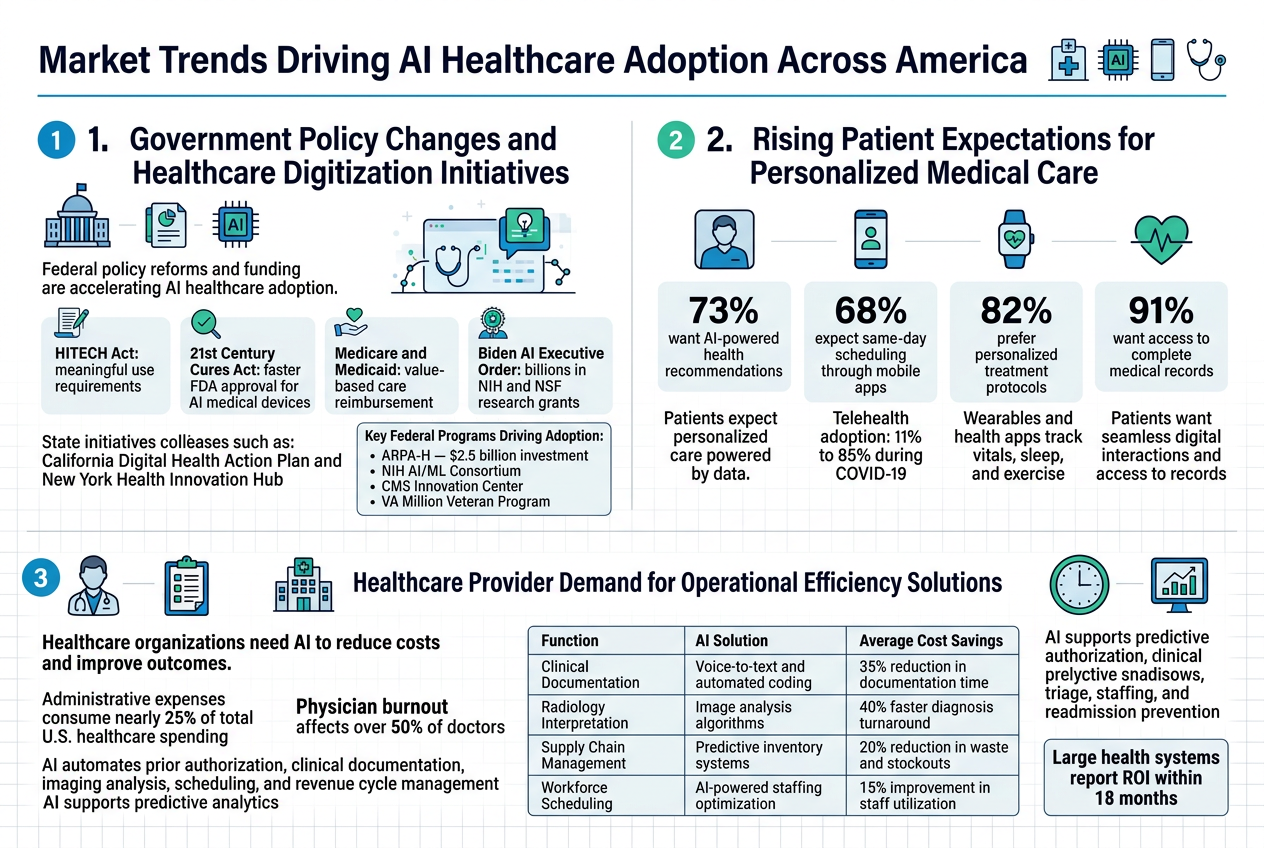
The federal government has thrown its weight behind AI healthcare adoption through strategic policy reforms and substantial funding commitments. The HITECH Act’s meaningful use requirements created the foundation for digital health records, while the 21st Century Cures Act accelerated FDA approval pathways for AI-driven medical devices. Medicare and Medicaid reimbursement policies now increasingly favor value-based care models that rely heavily on AI analytics to demonstrate improved patient outcomes and cost reductions.
The Biden administration’s AI Executive Order specifically targets healthcare as a priority sector, allocating billions in research grants through NIH and NSF programs. State-level initiatives have amplified these efforts – California’s Digital Health Action Plan and New York’s Health Innovation Hub demonstrate how regional governments are creating regulatory sandboxes for AI healthcare startups.
Key Federal Programs Driving Adoption:
- ARPA-H (Advanced Research Projects Agency for Health): $2.5 billion investment focused on breakthrough health technologies
- NIH AI/ML Consortium: Research partnerships between academic medical centers and tech companies
- CMS Innovation Center: Pilot programs testing AI-powered care coordination models
- VA Million Veteran Program: Large-scale AI research using veteran health data
Rising Patient Expectations for Personalized Medical Care
Today’s healthcare consumers demand the same level of personalization they experience with Netflix recommendations or Amazon shopping suggestions. Patients increasingly expect their doctors to leverage their complete health history, genetic markers, and lifestyle data to provide tailored treatment plans rather than one-size-fits-all approaches.
The pandemic accelerated this shift dramatically. Telehealth adoption jumped from 11% to 85% during COVID-19, introducing millions of Americans to digital health tools. Patients discovered they could receive quality care remotely, access their health records instantly, and communicate with providers through secure messaging platforms. This experience raised expectations for seamless, technology-enabled healthcare interactions.
Wearable devices and health apps have created a generation of patients who actively monitor their vital signs, sleep patterns, and exercise habits. These tech-savvy consumers arrive at appointments with detailed data about their health trends and expect providers to incorporate this information into their care decisions.
Patient-Driven Demand Indicators:
- 73% of patients want AI-powered health recommendations based on their personal data
- 68% expect same-day appointment scheduling through mobile apps
- 82% prefer providers who offer personalized treatment protocols
- 91% want access to their complete medical records through patient portals
Healthcare Provider Demand for Operational Efficiency Solutions
Healthcare organizations face mounting pressure to deliver better outcomes while controlling costs, creating an urgent need for AI solutions that streamline operations. Administrative expenses consume nearly 25% of total healthcare spending in the US, far exceeding other developed countries. Providers recognize that AI automation can significantly reduce these overhead costs while improving care quality.
Physician burnout has reached crisis levels, with over 50% of doctors reporting emotional exhaustion and considering leaving medicine. AI tools that automate routine tasks like prior authorization requests, clinical documentation, and diagnostic imaging analysis offer relief from administrative burdens that keep doctors away from patient care.
Hospital systems are embracing AI for predictive analytics that prevent costly readmissions and optimize staffing levels. Emergency departments use AI algorithms to prioritize patient triage, reducing wait times and improving resource allocation. Revenue cycle management powered by AI helps organizations capture missed billing opportunities and reduce claim denials.
Operational Efficiency Applications:
| Function | AI Solution | Average Cost Savings |
|---|---|---|
| Clinical Documentation | Voice-to-text and automated coding | 35% reduction in documentation time |
| Radiology Interpretation | Image analysis algorithms | 40% faster diagnosis turnaround |
| Supply Chain Management | Predictive inventory systems | 20% reduction in waste and stockouts |
| Workforce Scheduling | AI-powered staffing optimization | 15% improvement in staff utilization |
Large health systems like Kaiser Permanente and Mayo Clinic report significant ROI from AI investments, with some initiatives paying for themselves within 18 months through reduced labor costs and improved efficiency metrics.
Financial Investment and Implementation Costs for Healthcare Organizations
Initial Technology Infrastructure and Software Licensing Expenses
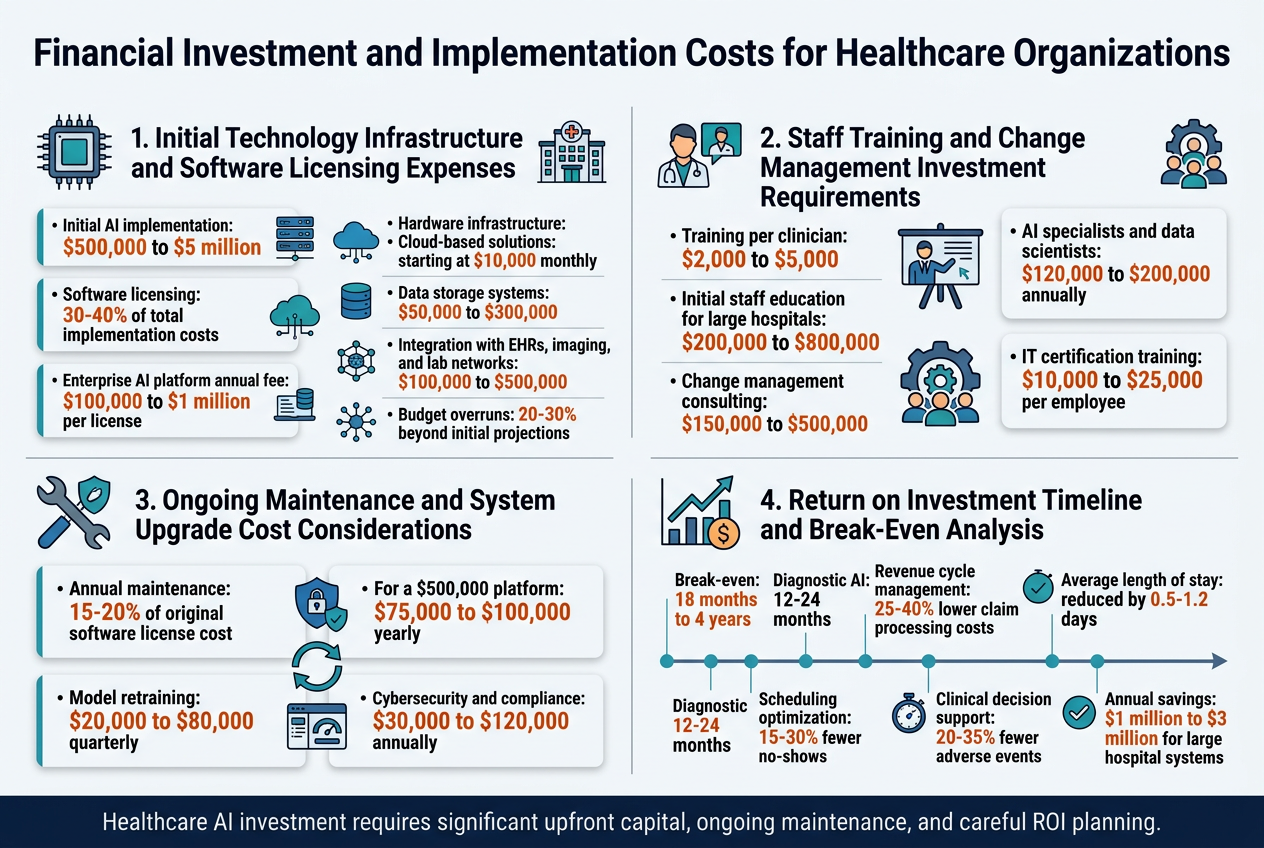
Healthcare organizations face substantial upfront costs when implementing AI solutions, with initial investments ranging from $500,000 to $5 million depending on the scope and complexity. Software licensing fees typically account for 30-40% of total implementation costs, with enterprise-level AI platforms charging annual fees between $100,000 and $1 million per license.
Hardware infrastructure represents another major expense category. High-performance computing systems required for AI processing can cost $200,000 to $800,000, while cloud-based solutions offer more flexible pricing models starting at $10,000 monthly for mid-sized hospitals. Data storage requirements often demand specialized systems capable of handling massive healthcare datasets, adding another $50,000 to $300,000 to infrastructure costs.
Integration expenses frequently surprise organizations during implementation. Connecting AI systems with existing electronic health records (EHRs), imaging systems, and laboratory networks requires custom development work costing $100,000 to $500,000. Many healthcare systems underestimate these integration complexities, leading to budget overruns of 20-30% beyond initial projections.
Staff Training and Change Management Investment Requirements
Training healthcare professionals represents a critical yet expensive component of AI implementation. Comprehensive training programs typically cost $2,000 to $5,000 per clinician, with larger hospitals spending $200,000 to $800,000 on initial staff education initiatives.
Change management consulting fees range from $150,000 to $500,000 for medium to large healthcare organizations. These consultants help address resistance to new technology, develop workflow modifications, and ensure smooth transitions from traditional processes to AI-enhanced systems.
Specialized IT staff recruitment adds significant costs to implementation budgets. AI specialists and data scientists command salaries between $120,000 and $200,000 annually, while training existing IT personnel requires additional investments of $10,000 to $25,000 per employee for certification programs.
Ongoing Maintenance and System Upgrade Cost Considerations
Annual maintenance fees typically consume 15-20% of the original software license cost. For a $500,000 AI platform, organizations should budget $75,000 to $100,000 yearly for technical support, security updates, and system monitoring services.
Algorithm updates and model retraining represent recurring expenses that many organizations overlook. Machine learning models require regular refinement using new data, costing $20,000 to $80,000 quarterly for complex clinical decision support systems.
Security and compliance maintenance adds another layer of ongoing expenses. Healthcare organizations spend $30,000 to $120,000 annually on cybersecurity measures specific to AI systems, including threat monitoring, penetration testing, and regulatory compliance audits.
Return on Investment Timeline and Break-Even Analysis
Most healthcare AI implementations achieve break-even between 18 months and 4 years post-deployment. Diagnostic AI systems typically show faster returns, breaking even within 12-24 months through improved accuracy and reduced diagnostic errors.
Administrative AI applications demonstrate strong ROI potential through operational efficiency gains. Revenue cycle management AI can reduce claim processing costs by 25-40%, while scheduling optimization systems decrease no-show rates by 15-30%, generating measurable savings within the first year.
Clinical decision support systems show longer payback periods but deliver substantial long-term value. These systems reduce adverse events by 20-35% and decrease average length of stay by 0.5-1.2 days, generating annual savings of $1-3 million for large hospital systems. Patient safety improvements and reduced malpractice risks provide additional value that extends well beyond the initial investment recovery period.
Proven Benefits Delivering Value to Patients and Healthcare Systems
Reduced Medical Errors and Enhanced Diagnostic Accuracy
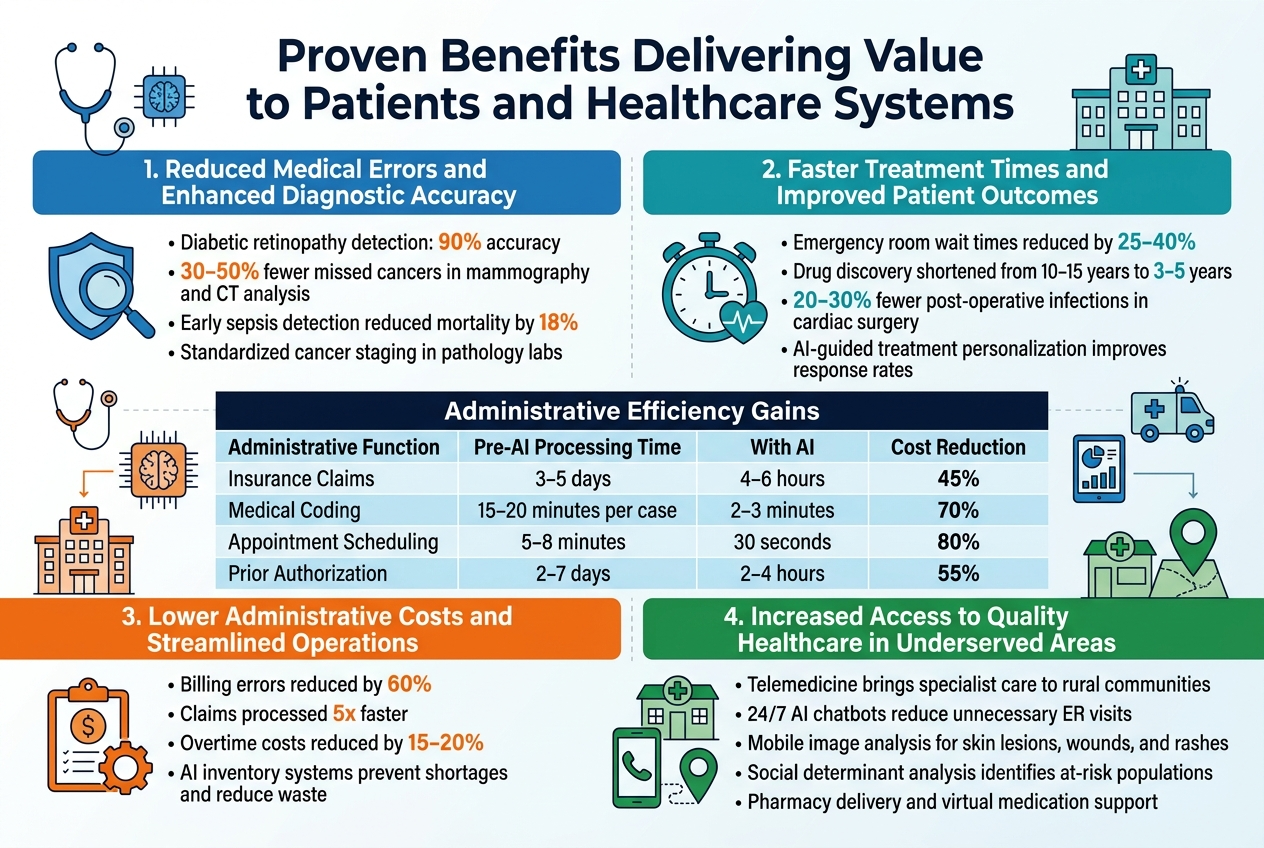
AI systems are revolutionizing diagnostic precision across American healthcare facilities. Machine learning algorithms now detect diabetic retinopathy with 90% accuracy, often spotting early signs that human physicians might miss during routine eye exams. Radiology departments report 30-50% fewer missed cancers when AI assists in mammography and CT scan analysis.
Clinical decision support systems cross-reference patient symptoms, medical history, and lab results against vast databases, flagging potential drug interactions before they occur. At Johns Hopkins, AI-powered sepsis detection reduced mortality rates by 18% by identifying warning signs hours earlier than traditional methods.
Pathology labs using AI for tissue analysis show remarkable consistency in cancer staging, eliminating the variability that sometimes occurs between different pathologists reviewing the same samples. These systems process thousands of cellular images in minutes, providing standardized assessments that support more confident treatment decisions.
Faster Treatment Times and Improved Patient Outcomes
Emergency departments equipped with AI triage systems reduce average wait times by 25-40%. These platforms instantly analyze patient symptoms, vital signs, and medical history to prioritize cases accurately. Critical patients receive immediate attention while less urgent cases flow through streamlined pathways.
AI-powered drug discovery accelerates medication development from 10-15 years to potentially 3-5 years. Pharmaceutical companies use machine learning to identify promising compounds faster, predict drug interactions, and optimize dosing protocols. This speed directly benefits patients waiting for new treatments for rare diseases and resistant conditions.
Surgical robotics enhanced with AI guidance enables minimally invasive procedures with greater precision. Patients experience shorter recovery times, reduced complications, and better long-term outcomes. Cardiac surgery programs report 20-30% fewer post-operative infections when AI assists in procedure planning and execution.
Treatment personalization through AI analysis of genetic markers, lifestyle factors, and response patterns leads to higher success rates. Cancer patients receiving AI-guided immunotherapy show improved response rates compared to traditional one-size-fits-all approaches.
Lower Administrative Costs and Streamlined Operations
Healthcare organizations save millions annually through AI-powered revenue cycle management. Automated coding systems reduce billing errors by 60% while processing claims 5x faster than manual methods. Insurance pre-authorization that previously took days now completes in hours through intelligent automation.
Staffing optimization algorithms analyze patient flow patterns, seasonal trends, and historical data to predict optimal nurse-to-patient ratios. Hospitals using these systems report 15-20% reductions in overtime costs while maintaining quality care standards.
| Administrative Function | Pre-AI Processing Time | With AI | Cost Reduction |
|---|---|---|---|
| Insurance Claims | 3-5 days | 4-6 hours | 45% |
| Medical Coding | 15-20 minutes per case | 2-3 minutes | 70% |
| Appointment Scheduling | 5-8 minutes | 30 seconds | 80% |
| Prior Authorization | 2-7 days | 2-4 hours | 55% |
Inventory management powered by AI prevents medication shortages while reducing waste from expired pharmaceuticals. Smart systems track usage patterns and automatically reorder supplies before stockouts occur, maintaining therapeutic continuity while cutting storage costs.
Increased Access to Quality Healthcare in Underserved Areas
Telemedicine platforms enhanced with AI diagnostics bring specialist expertise to rural communities previously hours away from quality care. Remote monitoring systems track chronic conditions like diabetes and hypertension, alerting local providers when intervention becomes necessary.
AI-powered chatbots provide 24/7 health guidance for common concerns, reducing unnecessary emergency room visits in areas with limited healthcare infrastructure. These systems triage symptoms, recommend appropriate care levels, and connect patients with available providers.
Mobile health applications using computer vision help patients in remote areas photograph skin lesions, wounds, or rashes for AI analysis. Dermatology expertise becomes available instantly, even in locations without specialist coverage.
Community health centers leverage AI to identify at-risk populations through social determinant analysis, targeting preventive interventions before costly complications develop. These programs show particular success in managing diabetes, hypertension, and substance abuse in underserved populations.
Pharmacy deserts benefit from AI-powered medication management systems that coordinate deliveries, monitor adherence, and provide virtual consultations. Patients maintain consistent access to essential medications without traveling long distances to traditional pharmacies.
Overcoming Implementation Challenges and Regulatory Hurdles
Data Privacy and Security Compliance Requirements
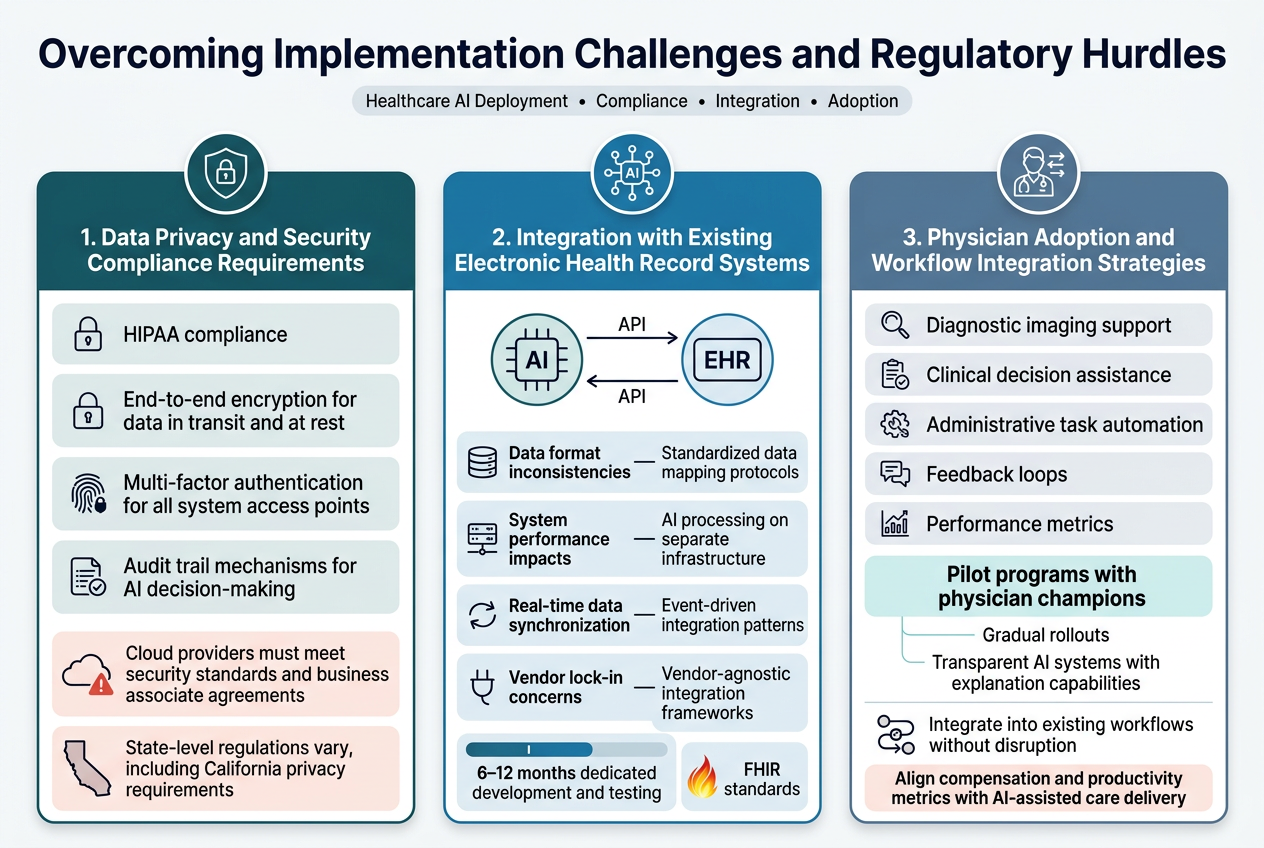
Healthcare organizations face complex regulatory landscapes when deploying AI solutions. HIPAA compliance remains the cornerstone requirement, demanding robust encryption protocols and strict access controls for any AI system processing patient health information. Organizations must establish comprehensive data governance frameworks that track how AI algorithms access, process, and store sensitive medical data.
The challenge extends beyond basic compliance. Healthcare systems need to implement zero-trust security architectures specifically designed for AI workloads. This includes:
- End-to-end encryption for data in transit and at rest
- Multi-factor authentication for all system access points
- Audit trail mechanisms that monitor AI decision-making processes
- Data anonymization techniques that preserve patient privacy while maintaining AI model effectiveness
Cloud-based AI solutions add another layer of complexity. Healthcare organizations must verify that cloud providers meet stringent security standards and offer business associate agreements that cover AI-specific use cases. Regular penetration testing and vulnerability assessments become critical for maintaining security posture as AI systems evolve.
State-level regulations also vary significantly across the US, requiring organizations to navigate different compliance requirements depending on their operational footprint. California’s Consumer Privacy Act and similar state legislation create additional obligations for healthcare AI implementations.
Integration with Existing Electronic Health Record Systems
EHR integration represents one of the most significant technical hurdles for AI healthcare adoption. Most healthcare organizations operate legacy systems built on different technological foundations, creating compatibility challenges that can derail AI initiatives.
Successful integration requires careful planning around data flow architectures. AI systems need real-time access to patient data while avoiding disruption to existing clinical workflows. This typically involves developing robust API connections that can handle high-volume data exchanges without compromising system performance.
Key integration considerations include:
| Challenge | Solution Approach |
|---|---|
| Data format inconsistencies | Implement standardized data mapping protocols |
| System performance impacts | Deploy AI processing on separate infrastructure |
| Real-time data synchronization | Establish event-driven integration patterns |
| Vendor lock-in concerns | Develop vendor-agnostic integration frameworks |
Healthcare organizations often underestimate the time and resources required for EHR integration. Successful implementations typically require 6-12 months of dedicated development work, including extensive testing phases to ensure data accuracy and system stability.
The rise of FHIR (Fast Healthcare Interoperability Resources) standards has simplified some integration challenges, but organizations still face significant customization requirements based on their specific EHR configurations and clinical workflows.
Physician Adoption and Workflow Integration Strategies
Getting physicians to embrace AI tools requires more than just technical implementation. Medical professionals need to see clear value propositions that enhance rather than complicate their daily routines. Change management becomes as important as the technology itself.
Successful adoption strategies focus on identifying specific pain points in current workflows where AI can provide immediate relief. Diagnostic imaging support, clinical decision assistance, and administrative task automation typically generate the strongest physician buy-in because they address existing frustrations.
Training programs need to address both technical competency and trust-building. Physicians want to understand how AI algorithms reach their conclusions, especially when those recommendations might influence patient care decisions. Transparent AI systems that provide explanation capabilities tend to achieve higher adoption rates.
Effective implementation tactics include:
- Pilot programs with physician champions who can advocate for broader adoption
- Gradual rollouts that introduce AI features incrementally
- Feedback loops that allow physicians to report issues and suggest improvements
- Performance metrics that demonstrate measurable improvements in patient outcomes
Healthcare organizations also need to address workflow disruption concerns. AI tools that require significant changes to established clinical processes face resistance. The most successful implementations seamlessly integrate into existing workflows, providing enhanced capabilities without requiring physicians to learn entirely new systems.
Compensation and productivity metrics may need adjustment to account for AI-assisted care delivery. Organizations that fail to align incentive structures with AI adoption goals often see limited physician engagement despite investing heavily in technology infrastructure.
AI technology is reshaping American healthcare at an incredible pace, bringing everything from diagnostic tools and robotic surgery to personalized treatment plans right to patients’ doorsteps. The market is growing fast because healthcare organizations see real value in these solutions, even though the upfront costs can be pretty steep. What makes the investment worthwhile is the clear benefits – better patient outcomes, reduced medical errors, and significant cost savings over time.
The road ahead isn’t without bumps though. Healthcare systems still need to work through regulatory requirements and staff training challenges before they can fully tap into AI’s potential. For healthcare leaders considering this technology, start small with pilot programs in areas like imaging or predictive analytics where you can see quick wins. The organizations that begin their AI journey now will be the ones leading the pack in delivering better, more efficient patient care tomorrow.
AI Healthcare Solutions in the USA: Trends, Costs & Benefits
AI healthcare solutions are changing how hospitals, clinics, and medical practices across America deliver patient care. Healthcare executives, administrators, IT decision-makers, and medical professionals need to understand how these technologies impact their organizations and bottom line.
This guide breaks down the current AI tools making real differences in patient outcomes and operational efficiency. We’ll explore the market trends pushing widespread adoption and examine the true costs of implementing these systems in your facility. You’ll also discover the measurable benefits that justify the investment and learn practical strategies for overcoming common roadblocks during rollout.
Current AI Healthcare Technologies Transforming Patient Care
Machine Learning Diagnostics and Medical Imaging Analysis
Machine learning algorithms are revolutionizing how doctors diagnose diseases and interpret medical images. AI systems now analyze X-rays, MRIs, and CT scans with remarkable accuracy, often spotting conditions human eyes might miss. Google’s DeepMind has developed AI that can detect over 50 eye diseases from retinal scans, while IBM Watson for Oncology helps oncologists make treatment decisions by analyzing vast amounts of cancer research data.
Radiology departments across major US hospitals rely on AI tools that flag potential tumors, fractures, and abnormalities in real-time. These systems work alongside radiologists, reducing diagnosis time from hours to minutes while improving accuracy rates. PathAI and other companies have created machine learning platforms that analyze tissue samples for cancer detection, achieving diagnostic precision that matches or exceeds experienced pathologists.
The technology excels at pattern recognition, analyzing thousands of medical images simultaneously to identify subtle indicators of disease progression. Emergency departments use AI-powered chest X-ray analysis to quickly identify pneumonia, while dermatology practices employ computer vision to screen for skin cancer through smartphone photos.
AI-Powered Drug Discovery and Development Platforms
Pharmaceutical companies are using artificial intelligence to accelerate drug discovery processes that traditionally take 10-15 years. AI platforms can now predict how different compounds will interact with target proteins, dramatically reducing the time needed for initial drug screening. Companies like Atomwise and Recursion Pharmaceuticals use machine learning to identify promising drug candidates in months rather than years.
These platforms analyze millions of molecular structures and predict their therapeutic potential before any lab testing begins. AI models can simulate how drugs will behave in human bodies, predicting side effects and effectiveness early in development. Biogen partnered with Accenture to use AI for identifying new treatments for neurological diseases, while Roche employs machine learning to optimize clinical trial design and patient selection.
The technology also personalizes drug development by analyzing genetic data to predict which patients will respond best to specific treatments. AI-driven platforms have already contributed to breakthrough discoveries, including COVID-19 treatments and new antibiotics. Drug repurposing efforts use AI to find new applications for existing medications, potentially bringing treatments to market faster and at lower costs.
Robotic Surgery Systems and Precision Treatment Tools
Robotic surgical systems equipped with AI capabilities are transforming operating rooms across America. The da Vinci Surgical System, used in over 6,000 US hospitals, combines robotic precision with AI-enhanced visualization to perform minimally invasive procedures. Surgeons control robotic arms with tremor elimination and motion scaling, allowing for incredibly precise movements during delicate operations.
AI-powered surgical robots can now adapt to unexpected situations during procedures, automatically adjusting for patient movement or tissue changes. These systems provide real-time feedback to surgeons, highlighting critical structures and suggesting optimal surgical paths. Mazor X spinal surgery robots use AI to plan and execute spine procedures with millimeter precision, reducing complications and recovery times.
Precision treatment tools extend beyond surgery to radiation therapy and other interventions. CyberKnife systems use AI to track tumor movement and deliver targeted radiation beams that move with the patient’s breathing. Smart surgical instruments equipped with sensors can distinguish between healthy and diseased tissue, guiding surgeons during tumor removal procedures.
Virtual Health Assistants and Telemedicine Solutions
AI-powered virtual health assistants have become essential tools for patient care and medical practice management. Babylon Health’s AI chatbot conducts initial patient assessments, asking relevant questions and providing preliminary diagnoses based on symptoms. These digital assistants help patients determine whether they need immediate care, can wait for a regular appointment, or should try home remedies.
Telemedicine platforms integrate AI to enhance remote consultations and monitoring. AI algorithms analyze patient data from wearable devices, alerting healthcare providers to concerning changes in vital signs or activity patterns. Companies like Teladoc and Amwell use machine learning to match patients with appropriate specialists and predict which cases require in-person visits.
Virtual nursing assistants help hospitals manage patient care outside traditional visiting hours. These AI systems answer patient questions, remind them to take medications, and escalate concerns to human nurses when necessary. Voice-activated assistants in hospital rooms allow patients to request help, adjust room settings, or access entertainment without touching potentially contaminated surfaces.
The technology also supports mental health care through AI-powered therapy chatbots and mood tracking applications. These tools provide 24/7 support for patients with anxiety, depression, or other mental health conditions, bridging gaps between traditional therapy sessions and offering immediate assistance during crisis situations.
Market Trends Driving AI Healthcare Adoption Across America
Government Policy Changes and Healthcare Digitization Initiatives
The federal government has thrown its weight behind AI healthcare adoption through strategic policy reforms and substantial funding commitments. The HITECH Act’s meaningful use requirements created the foundation for digital health records, while the 21st Century Cures Act accelerated FDA approval pathways for AI-driven medical devices. Medicare and Medicaid reimbursement policies now increasingly favor value-based care models that rely heavily on AI analytics to demonstrate improved patient outcomes and cost reductions.
The Biden administration’s AI Executive Order specifically targets healthcare as a priority sector, allocating billions in research grants through NIH and NSF programs. State-level initiatives have amplified these efforts – California’s Digital Health Action Plan and New York’s Health Innovation Hub demonstrate how regional governments are creating regulatory sandboxes for AI healthcare startups.
Key Federal Programs Driving Adoption:
- ARPA-H (Advanced Research Projects Agency for Health): $2.5 billion investment focused on breakthrough health technologies
- NIH AI/ML Consortium: Research partnerships between academic medical centers and tech companies
- CMS Innovation Center: Pilot programs testing AI-powered care coordination models
- VA Million Veteran Program: Large-scale AI research using veteran health data
Rising Patient Expectations for Personalized Medical Care
Today’s healthcare consumers demand the same level of personalization they experience with Netflix recommendations or Amazon shopping suggestions. Patients increasingly expect their doctors to leverage their complete health history, genetic markers, and lifestyle data to provide tailored treatment plans rather than one-size-fits-all approaches.
The pandemic accelerated this shift dramatically. Telehealth adoption jumped from 11% to 85% during COVID-19, introducing millions of Americans to digital health tools. Patients discovered they could receive quality care remotely, access their health records instantly, and communicate with providers through secure messaging platforms. This experience raised expectations for seamless, technology-enabled healthcare interactions.
Wearable devices and health apps have created a generation of patients who actively monitor their vital signs, sleep patterns, and exercise habits. These tech-savvy consumers arrive at appointments with detailed data about their health trends and expect providers to incorporate this information into their care decisions.
Patient-Driven Demand Indicators:
- 73% of patients want AI-powered health recommendations based on their personal data
- 68% expect same-day appointment scheduling through mobile apps
- 82% prefer providers who offer personalized treatment protocols
- 91% want access to their complete medical records through patient portals
Healthcare Provider Demand for Operational Efficiency Solutions
Healthcare organizations face mounting pressure to deliver better outcomes while controlling costs, creating an urgent need for AI solutions that streamline operations. Administrative expenses consume nearly 25% of total healthcare spending in the US, far exceeding other developed countries. Providers recognize that AI automation can significantly reduce these overhead costs while improving care quality.
Physician burnout has reached crisis levels, with over 50% of doctors reporting emotional exhaustion and considering leaving medicine. AI tools that automate routine tasks like prior authorization requests, clinical documentation, and diagnostic imaging analysis offer relief from administrative burdens that keep doctors away from patient care.
Hospital systems are embracing AI for predictive analytics that prevent costly readmissions and optimize staffing levels. Emergency departments use AI algorithms to prioritize patient triage, reducing wait times and improving resource allocation. Revenue cycle management powered by AI helps organizations capture missed billing opportunities and reduce claim denials.
Operational Efficiency Applications:
| Function | AI Solution | Average Cost Savings |
|---|---|---|
| Clinical Documentation | Voice-to-text and automated coding | 35% reduction in documentation time |
| Radiology Interpretation | Image analysis algorithms | 40% faster diagnosis turnaround |
| Supply Chain Management | Predictive inventory systems | 20% reduction in waste and stockouts |
| Workforce Scheduling | AI-powered staffing optimization | 15% improvement in staff utilization |
Large health systems like Kaiser Permanente and Mayo Clinic report significant ROI from AI investments, with some initiatives paying for themselves within 18 months through reduced labor costs and improved efficiency metrics.
Financial Investment and Implementation Costs for Healthcare Organizations
Initial Technology Infrastructure and Software Licensing Expenses
Healthcare organizations face substantial upfront costs when implementing AI solutions, with initial investments ranging from $500,000 to $5 million depending on the scope and complexity. Software licensing fees typically account for 30-40% of total implementation costs, with enterprise-level AI platforms charging annual fees between $100,000 and $1 million per license.
Hardware infrastructure represents another major expense category. High-performance computing systems required for AI processing can cost $200,000 to $800,000, while cloud-based solutions offer more flexible pricing models starting at $10,000 monthly for mid-sized hospitals. Data storage requirements often demand specialized systems capable of handling massive healthcare datasets, adding another $50,000 to $300,000 to infrastructure costs.
Integration expenses frequently surprise organizations during implementation. Connecting AI systems with existing electronic health records (EHRs), imaging systems, and laboratory networks requires custom development work costing $100,000 to $500,000. Many healthcare systems underestimate these integration complexities, leading to budget overruns of 20-30% beyond initial projections.
Staff Training and Change Management Investment Requirements
Training healthcare professionals represents a critical yet expensive component of AI implementation. Comprehensive training programs typically cost $2,000 to $5,000 per clinician, with larger hospitals spending $200,000 to $800,000 on initial staff education initiatives.
Change management consulting fees range from $150,000 to $500,000 for medium to large healthcare organizations. These consultants help address resistance to new technology, develop workflow modifications, and ensure smooth transitions from traditional processes to AI-enhanced systems.
Specialized IT staff recruitment adds significant costs to implementation budgets. AI specialists and data scientists command salaries between $120,000 and $200,000 annually, while training existing IT personnel requires additional investments of $10,000 to $25,000 per employee for certification programs.
Ongoing Maintenance and System Upgrade Cost Considerations
Annual maintenance fees typically consume 15-20% of the original software license cost. For a $500,000 AI platform, organizations should budget $75,000 to $100,000 yearly for technical support, security updates, and system monitoring services.
Algorithm updates and model retraining represent recurring expenses that many organizations overlook. Machine learning models require regular refinement using new data, costing $20,000 to $80,000 quarterly for complex clinical decision support systems.
Security and compliance maintenance adds another layer of ongoing expenses. Healthcare organizations spend $30,000 to $120,000 annually on cybersecurity measures specific to AI systems, including threat monitoring, penetration testing, and regulatory compliance audits.
Return on Investment Timeline and Break-Even Analysis
Most healthcare AI implementations achieve break-even between 18 months and 4 years post-deployment. Diagnostic AI systems typically show faster returns, breaking even within 12-24 months through improved accuracy and reduced diagnostic errors.
Administrative AI applications demonstrate strong ROI potential through operational efficiency gains. Revenue cycle management AI can reduce claim processing costs by 25-40%, while scheduling optimization systems decrease no-show rates by 15-30%, generating measurable savings within the first year.
Clinical decision support systems show longer payback periods but deliver substantial long-term value. These systems reduce adverse events by 20-35% and decrease average length of stay by 0.5-1.2 days, generating annual savings of $1-3 million for large hospital systems. Patient safety improvements and reduced malpractice risks provide additional value that extends well beyond the initial investment recovery period.
Proven Benefits Delivering Value to Patients and Healthcare Systems
Reduced Medical Errors and Enhanced Diagnostic Accuracy
AI systems are revolutionizing diagnostic precision across American healthcare facilities. Machine learning algorithms now detect diabetic retinopathy with 90% accuracy, often spotting early signs that human physicians might miss during routine eye exams. Radiology departments report 30-50% fewer missed cancers when AI assists in mammography and CT scan analysis.
Clinical decision support systems cross-reference patient symptoms, medical history, and lab results against vast databases, flagging potential drug interactions before they occur. At Johns Hopkins, AI-powered sepsis detection reduced mortality rates by 18% by identifying warning signs hours earlier than traditional methods.
Pathology labs using AI for tissue analysis show remarkable consistency in cancer staging, eliminating the variability that sometimes occurs between different pathologists reviewing the same samples. These systems process thousands of cellular images in minutes, providing standardized assessments that support more confident treatment decisions.
Faster Treatment Times and Improved Patient Outcomes
Emergency departments equipped with AI triage systems reduce average wait times by 25-40%. These platforms instantly analyze patient symptoms, vital signs, and medical history to prioritize cases accurately. Critical patients receive immediate attention while less urgent cases flow through streamlined pathways.
AI-powered drug discovery accelerates medication development from 10-15 years to potentially 3-5 years. Pharmaceutical companies use machine learning to identify promising compounds faster, predict drug interactions, and optimize dosing protocols. This speed directly benefits patients waiting for new treatments for rare diseases and resistant conditions.
Surgical robotics enhanced with AI guidance enables minimally invasive procedures with greater precision. Patients experience shorter recovery times, reduced complications, and better long-term outcomes. Cardiac surgery programs report 20-30% fewer post-operative infections when AI assists in procedure planning and execution.
Treatment personalization through AI analysis of genetic markers, lifestyle factors, and response patterns leads to higher success rates. Cancer patients receiving AI-guided immunotherapy show improved response rates compared to traditional one-size-fits-all approaches.
Lower Administrative Costs and Streamlined Operations
Healthcare organizations save millions annually through AI-powered revenue cycle management. Automated coding systems reduce billing errors by 60% while processing claims 5x faster than manual methods. Insurance pre-authorization that previously took days now completes in hours through intelligent automation.
Staffing optimization algorithms analyze patient flow patterns, seasonal trends, and historical data to predict optimal nurse-to-patient ratios. Hospitals using these systems report 15-20% reductions in overtime costs while maintaining quality care standards.
| Administrative Function | Pre-AI Processing Time | With AI | Cost Reduction |
|---|---|---|---|
| Insurance Claims | 3-5 days | 4-6 hours | 45% |
| Medical Coding | 15-20 minutes per case | 2-3 minutes | 70% |
| Appointment Scheduling | 5-8 minutes | 30 seconds | 80% |
| Prior Authorization | 2-7 days | 2-4 hours | 55% |
Inventory management powered by AI prevents medication shortages while reducing waste from expired pharmaceuticals. Smart systems track usage patterns and automatically reorder supplies before stockouts occur, maintaining therapeutic continuity while cutting storage costs.
Increased Access to Quality Healthcare in Underserved Areas
Telemedicine platforms enhanced with AI diagnostics bring specialist expertise to rural communities previously hours away from quality care. Remote monitoring systems track chronic conditions like diabetes and hypertension, alerting local providers when intervention becomes necessary.
AI-powered chatbots provide 24/7 health guidance for common concerns, reducing unnecessary emergency room visits in areas with limited healthcare infrastructure. These systems triage symptoms, recommend appropriate care levels, and connect patients with available providers.
Mobile health applications using computer vision help patients in remote areas photograph skin lesions, wounds, or rashes for AI analysis. Dermatology expertise becomes available instantly, even in locations without specialist coverage.
Community health centers leverage AI to identify at-risk populations through social determinant analysis, targeting preventive interventions before costly complications develop. These programs show particular success in managing diabetes, hypertension, and substance abuse in underserved populations.
Pharmacy deserts benefit from AI-powered medication management systems that coordinate deliveries, monitor adherence, and provide virtual consultations. Patients maintain consistent access to essential medications without traveling long distances to traditional pharmacies.
Overcoming Implementation Challenges and Regulatory Hurdles
Data Privacy and Security Compliance Requirements
Healthcare organizations face complex regulatory landscapes when deploying AI solutions. HIPAA compliance remains the cornerstone requirement, demanding robust encryption protocols and strict access controls for any AI system processing patient health information. Organizations must establish comprehensive data governance frameworks that track how AI algorithms access, process, and store sensitive medical data.
The challenge extends beyond basic compliance. Healthcare systems need to implement zero-trust security architectures specifically designed for AI workloads. This includes:
- End-to-end encryption for data in transit and at rest
- Multi-factor authentication for all system access points
- Audit trail mechanisms that monitor AI decision-making processes
- Data anonymization techniques that preserve patient privacy while maintaining AI model effectiveness
Cloud-based AI solutions add another layer of complexity. Healthcare organizations must verify that cloud providers meet stringent security standards and offer business associate agreements that cover AI-specific use cases. Regular penetration testing and vulnerability assessments become critical for maintaining security posture as AI systems evolve.
State-level regulations also vary significantly across the US, requiring organizations to navigate different compliance requirements depending on their operational footprint. California’s Consumer Privacy Act and similar state legislation create additional obligations for healthcare AI implementations.
Integration with Existing Electronic Health Record Systems
EHR integration represents one of the most significant technical hurdles for AI healthcare adoption. Most healthcare organizations operate legacy systems built on different technological foundations, creating compatibility challenges that can derail AI initiatives.
Successful integration requires careful planning around data flow architectures. AI systems need real-time access to patient data while avoiding disruption to existing clinical workflows. This typically involves developing robust API connections that can handle high-volume data exchanges without compromising system performance.
Key integration considerations include:
| Challenge | Solution Approach |
|---|---|
| Data format inconsistencies | Implement standardized data mapping protocols |
| System performance impacts | Deploy AI processing on separate infrastructure |
| Real-time data synchronization | Establish event-driven integration patterns |
| Vendor lock-in concerns | Develop vendor-agnostic integration frameworks |
Healthcare organizations often underestimate the time and resources required for EHR integration. Successful implementations typically require 6-12 months of dedicated development work, including extensive testing phases to ensure data accuracy and system stability.
The rise of FHIR (Fast Healthcare Interoperability Resources) standards has simplified some integration challenges, but organizations still face significant customization requirements based on their specific EHR configurations and clinical workflows.
Physician Adoption and Workflow Integration Strategies
Getting physicians to embrace AI tools requires more than just technical implementation. Medical professionals need to see clear value propositions that enhance rather than complicate their daily routines. Change management becomes as important as the technology itself.
Successful adoption strategies focus on identifying specific pain points in current workflows where AI can provide immediate relief. Diagnostic imaging support, clinical decision assistance, and administrative task automation typically generate the strongest physician buy-in because they address existing frustrations.
Training programs need to address both technical competency and trust-building. Physicians want to understand how AI algorithms reach their conclusions, especially when those recommendations might influence patient care decisions. Transparent AI systems that provide explanation capabilities tend to achieve higher adoption rates.
Effective implementation tactics include:
- Pilot programs with physician champions who can advocate for broader adoption
- Gradual rollouts that introduce AI features incrementally
- Feedback loops that allow physicians to report issues and suggest improvements
- Performance metrics that demonstrate measurable improvements in patient outcomes
Healthcare organizations also need to address workflow disruption concerns. AI tools that require significant changes to established clinical processes face resistance. The most successful implementations seamlessly integrate into existing workflows, providing enhanced capabilities without requiring physicians to learn entirely new systems.
Compensation and productivity metrics may need adjustment to account for AI-assisted care delivery. Organizations that fail to align incentive structures with AI adoption goals often see limited physician engagement despite investing heavily in technology infrastructure.
AI technology is reshaping American healthcare at an incredible pace, bringing everything from diagnostic tools and robotic surgery to personalized treatment plans right to patients’ doorsteps. The market is growing fast because healthcare organizations see real value in these solutions, even though the upfront costs can be pretty steep. What makes the investment worthwhile is the clear benefits – better patient outcomes, reduced medical errors, and significant cost savings over time.
The road ahead isn’t without bumps though. Healthcare systems still need to work through regulatory requirements and staff training challenges before they can fully tap into AI’s potential. For healthcare leaders considering this technology, start small with pilot programs in areas like imaging or predictive analytics where you can see quick wins. The organizations that begin their AI journey now will be the ones leading the pack in delivering better, more efficient patient care tomorrow.